
Italian coffee culture is the everyday ritual of drinking short, high-quality espresso at the bar and following a few simple rules about when, where, and what to order.
This guide shows you exactly how to order coffee in Italy, how to pay, and the little etiquette cues that help you blend in – from choosing al banco (at the counter) or al tavolo (table service) to when a cappuccino makes sense and when an espresso is the better choice.
Good to Know: Coffee prices vary by location, with higher prices in the historic centres of major cities and in tourist hotspots. Expect counter service (al banco) to be the fastest and best value, with espresso costing between 1.20 and two euros per cup.
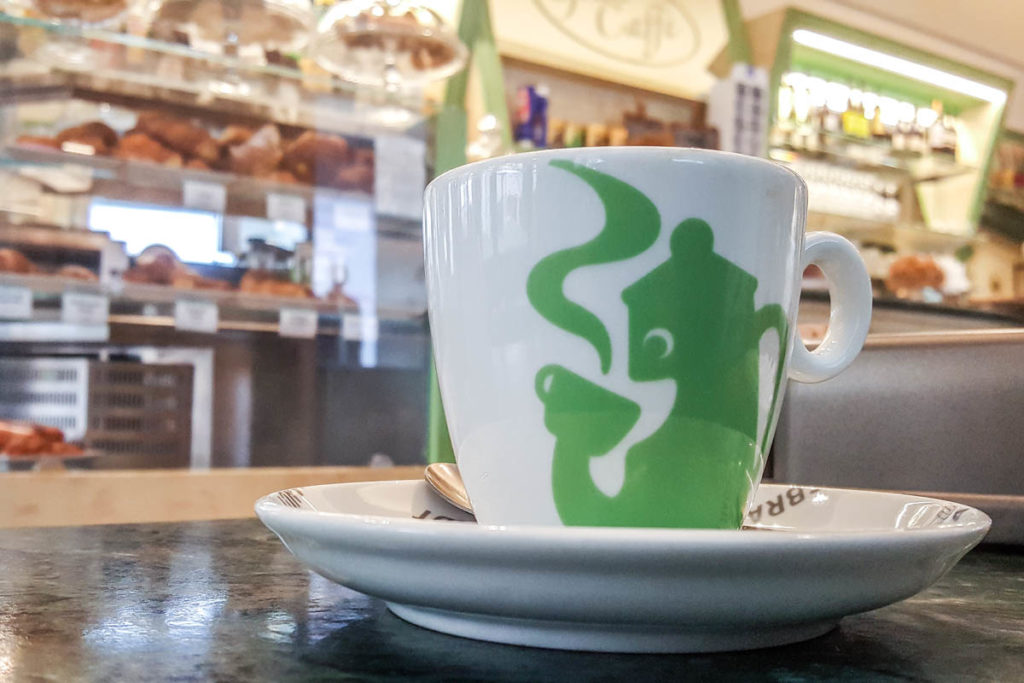
30-Second Cheat Sheet
- What to say: Buongiorno! Un caffè, per favore.
- Pro tip: Ordering un caffè gets you a standard espresso. If you want a different type of coffee, substitute caffè accordingly: cappuccino, macchiato, marocchino, etc.)
- Where to drink: At the counter (al banco) is quick and typically cheapest. At a table (al tavolo) costs more. Sitting on the outside tables may attract an even higher charge, especially if they afford a view of a historic sight.
- When to drink: Milky coffees (like cappuccino) are a morning choice. Espresso is fine anytime.
- How to pay: In many bars, you drink first, then pay at the cassa (till). Busy spots may ask you to pay first.
- Tipping: Not expected in principle. A small coin is optional.
New to Italian coffee drinks? You might also like: 21 Types of Italian Coffee (and how to order each) and Cold Coffee Classics (shakerato, affogato, crema al caffè).
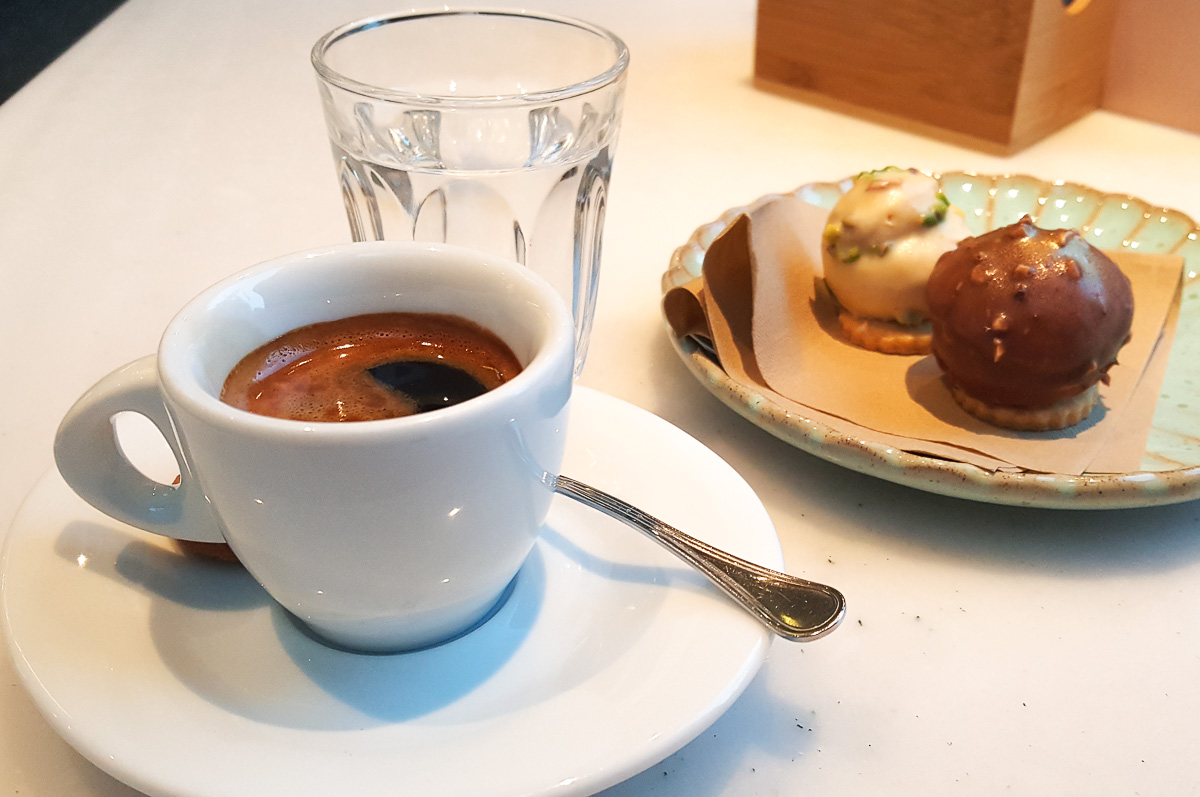
Trying to order your first cup of coffee in Italy can be a confusing experience. First, you may be shocked to discover that to have a coffee, Italians head not to a fancy coffee shop but to the bar. Second, coffee sizes in Italy may seem absolutely tiny next to what the international coffee chains have conditioned us to think of as a standard coffee cup.
Fear not! Italian coffee etiquette makes a lot of sense once you know how it functions. Known as il galateo del caffè, it has been honed over several centuries into a rigorously observed system of rituals and behaviours. Its end goal is to extract the maximum amount of flavour and pleasure out of a small cup of high-quality coffee. Experiencing it first-hand helps you understand the Italian identity a little bit better.
Take it from me! I spent six years living in Italy, and within a couple of months, popping down to the bar for a coffee had become a daily ritual for me. A ritual that took me a bit of effort to decipher and feel fully versed in. Once everything clicked into place, I was like: ‘This makes so much sense!’ After all, coffee as a daily habit reached Europe via Italy between the 16th and 17th centuries, and nowadays, around four kg of coffee is consumed per capita in the country every year.
In this guide, I share 19 essential rules of Italian coffee culture, the etiquette locals follow, plus the mistakes I made so you don’t have to. By the end, you’ll know how to order coffee in Italy and enjoy it the Italian way. Bonus: There’s a step-by-step script with the exact phrases to use. Jump to it at the end of this page.
Now, let’s begin!
Italian Coffee Culture: 19 Essential Rules (How to Drink Coffee Like an Italian)
Pin This Blog Post!
1. Excellent Coffee Is Everywhere in Italy
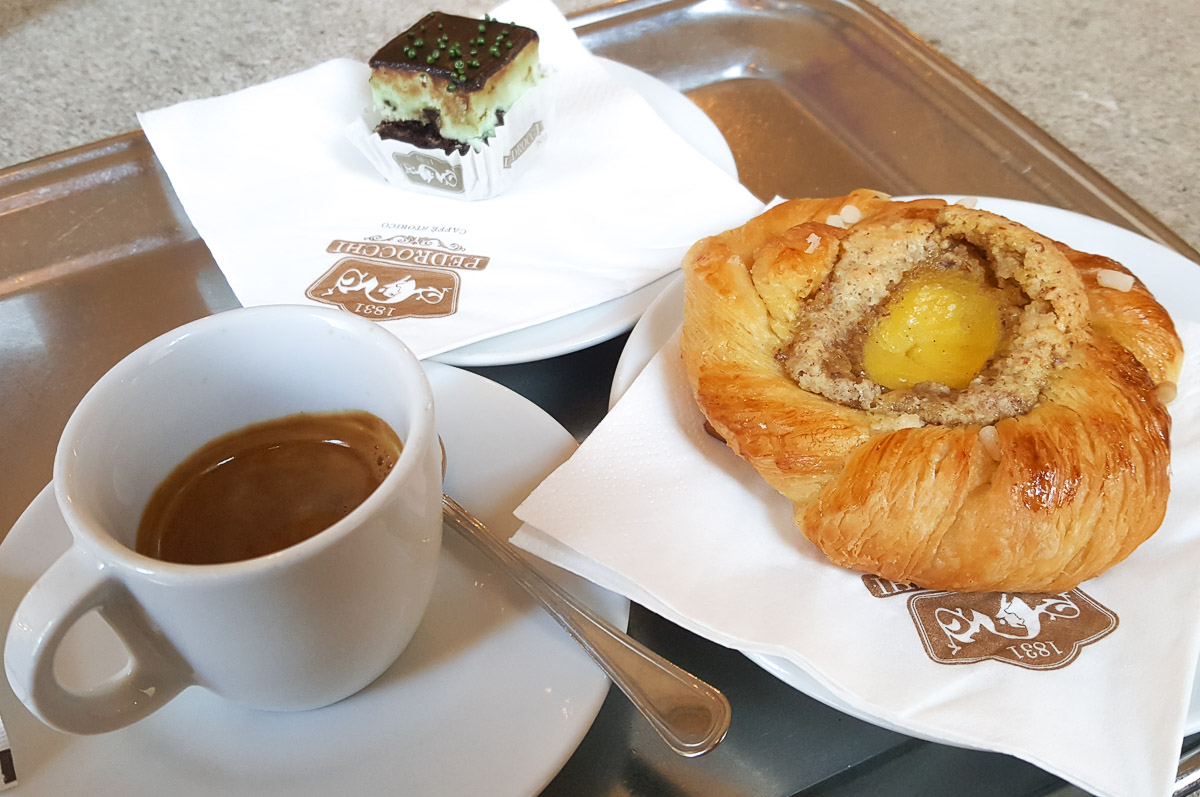
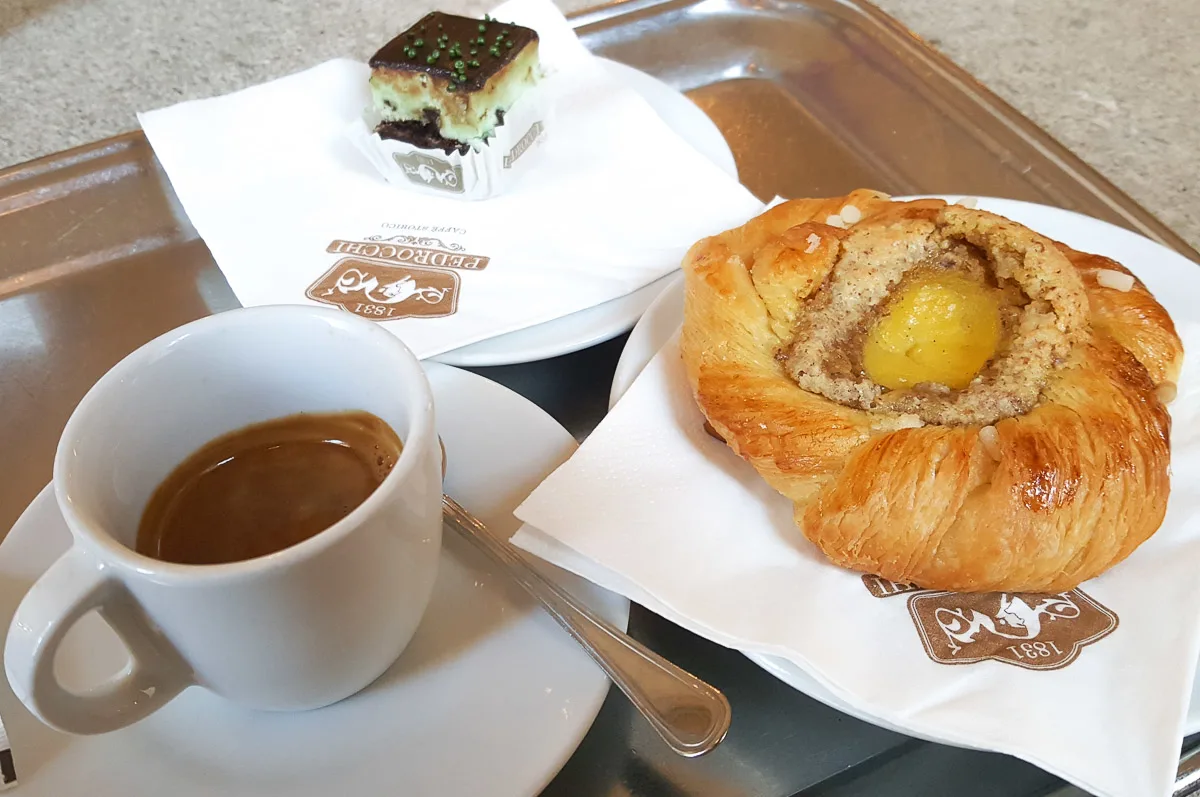
One of the best things about Italy is that excellent coffee is everywhere. You don’t need to seek out a specialist café to enjoy a good cup. Even the most nondescript Italian bar has a top-of-the-range coffee machine, knows how to use it, and serves high-quality coffee.
Great coffee in Italy isn’t the preserve of a handful of connoisseurs willing to spend years and thousands of euros on equipment and blends. Whatever their social or financial position may be, Italians as a whole know coffee and how to drink it.
There’s a tacit, nationwide expectation that coffee should be fragrant, strong, made from freshly ground beans, and shouldn’t cost the earth. Prices have crept up. In some places, they have nearly doubled over the past five years. Still, an espresso taken at the counter hovers around €1.50, often €1.20-€1.30 in smaller towns and up to €2.00 in tourist hotspots.
This makes having a coffee one of the most affordable, easy-to-enjoy cultural experiences in Italy. It’s perfect for people-watching and slipping into the rhythm of local life. Wherever you are – big city, small village, lakeside promenade, or walled hill town – a good cup of coffee is the rule rather than the exception.
In fact, over six years of living in Italy and having coffee out almost daily, I had a subpar cup twice. I didn’t hold it against the two cafés, but the locals did. Both closed within six months of opening.
KEY TIP: When in Italy, don’t hunt for speciality coffee shops. A neighbourhood bar will serve a proper, fragrant espresso at a still very affordable price.
2. For a Coffee in Italy, Go to the Bar
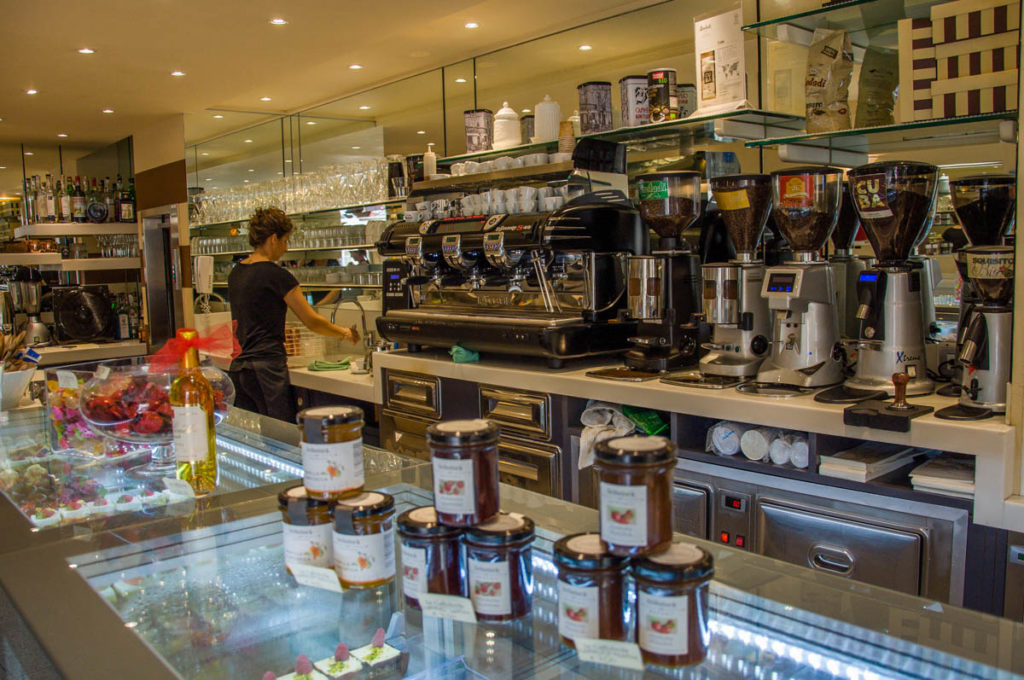
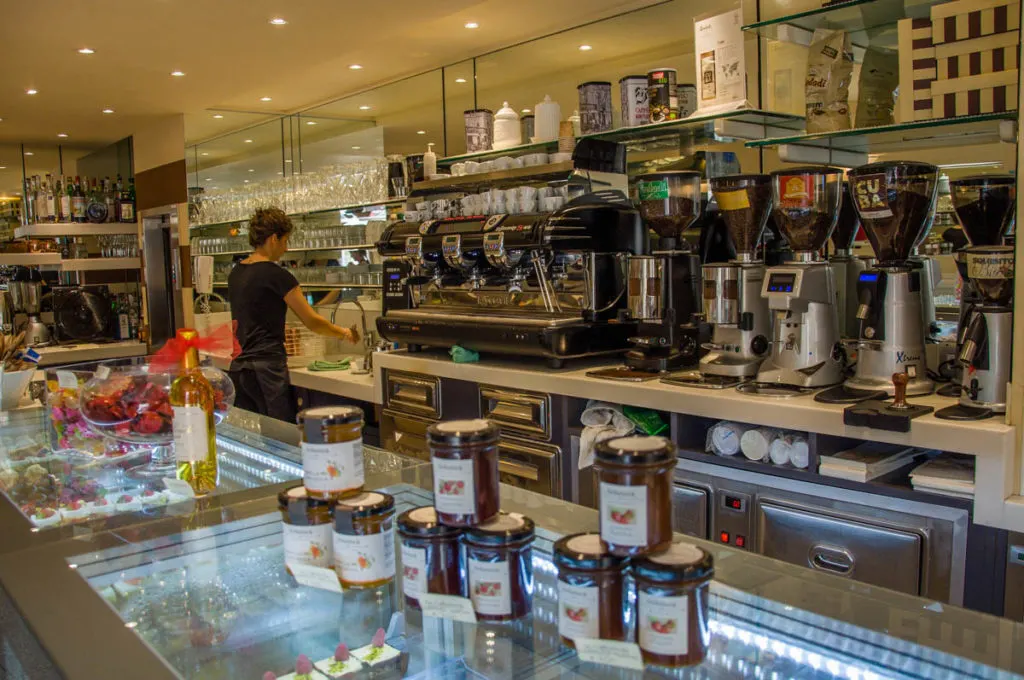
For their daily coffee, Italians go to the bar. Elsewhere, a bar is mainly for alcoholic drinks and socialising with friends after work. In Italy, it’s a little different.
Italian bars open early in the morning and stay open throughout the day. They are perfectly fine to visit with children. This is where you go for an Italian breakfast, traditionally a cappuccino and a pastry (locally called cornetto or brioche), and where you will pop in for an espresso during your mid-morning break. Many bars also serve light lunches or sell sandwiches (panini, tramezzini) and other small bites. In the evening, alcoholic drinks are offered, too.
The main function of an Italian bar, though, is to serve great coffee. In fact, the best way to learn about Italian coffee culture is to spend some time in an Italian bar observing the locals. You will see little old ladies with perfectly coiffed hair, businessmen dressed to the nines, workers on their morning break, students popping in between lectures – all enjoying a strong, fragrant cup.
Watch how they greet the barista, how they lean against the counter, how they stir their coffee, how they hold the cup, how they sip. It’s a coffee university condensed into a few minutes.
Yes, there are cafés in Italy, too. In Italian, they are called caffè, often elegant establishments, some of which have been operating for decades, even centuries. Notable examples include Caffè Bontadi (est. 1790) in Rovereto and Caffè Pedrocchi (est. 1831) in Padua. As well as the famous Caffè Florian in Venice, often described as the world’s oldest coffee house. It first opened in 1720!
An Italian pasticceria, or patisserie, is another excellent place for a coffee in Italy. Especially if you have a sweet tooth and want to try some of the local pastries, biscuits, and cakes.
KEY TIP: Think of bars in Italy as the right place for a coffee stop. Greet, order, sip, go. It’s perfectly normal to take children along, too.
3. Barista is a Respected Career in Italy
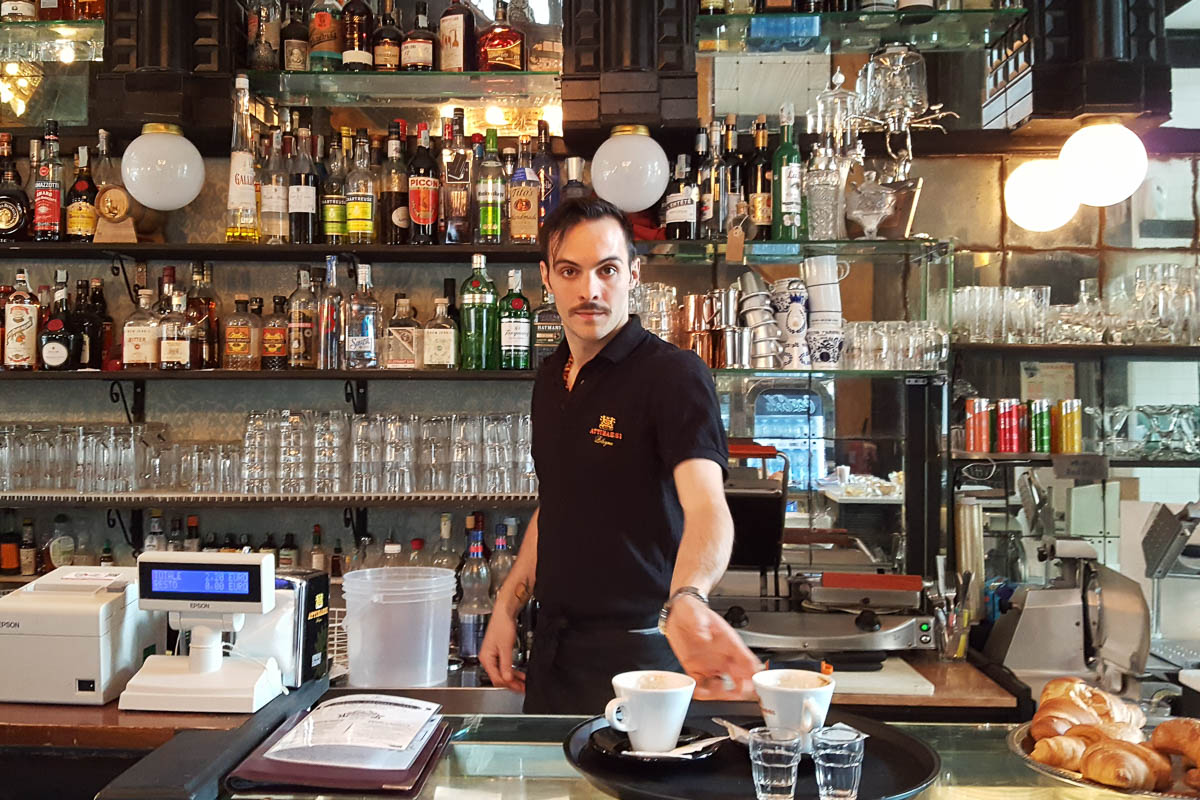
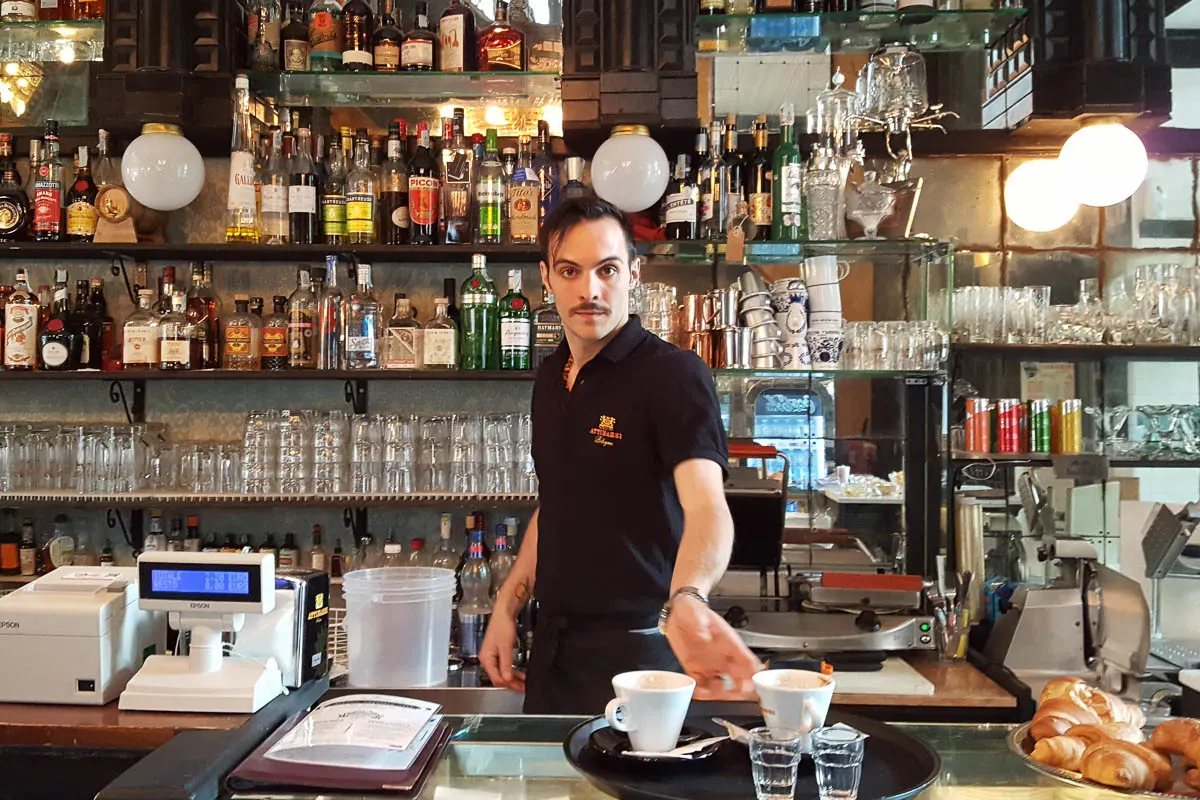
The person who makes your coffee in Italy is called a barista.
Being a barista is a popular and respected profession in Italy. Around 400,000 people work in bars across the country, each making hundreds of coffees every day. While in other countries it’s often a job taken by students or a stopgap while pursuing another career, in Italy it can be a lifelong vocation. Curiously, Achille Gaggia, the inventor of the first modern steamless espresso machine, was a barista in Milan. His revolutionary piston mechanism allowed baristas to pull an espresso in about 15 seconds. Today, Gaggia coffee machines are among the best in the business.
Italian baristas have coffee-making down to a fine art. Their expert hands control and fine-tune all the elements that need to come together to produce the perfect cup. A good barista understands the qualities of different blends and roasts, knows how to maintain and use the machines, and adjusts the grinder according to all the little variables. Above all, a good barista keeps a friendly rapport with customers, many of whom return day after day for their caffè.
Needless to say, being nice and polite when addressing the barista is a must. Greeting them on the way in and on your way out of the bar is considered good manners.
Traditionally, baristas in Italy don’t expect a tip. In some places, predominantly in tourist hotspots, you may see a small tip box on the counter, but it’s still the exception rather than the rule.
KEY TIP: Be concise and polite with orders. Service is fast and professional. Traditionally, tipping isn’t expected.
4. One Coffee Size Fits All
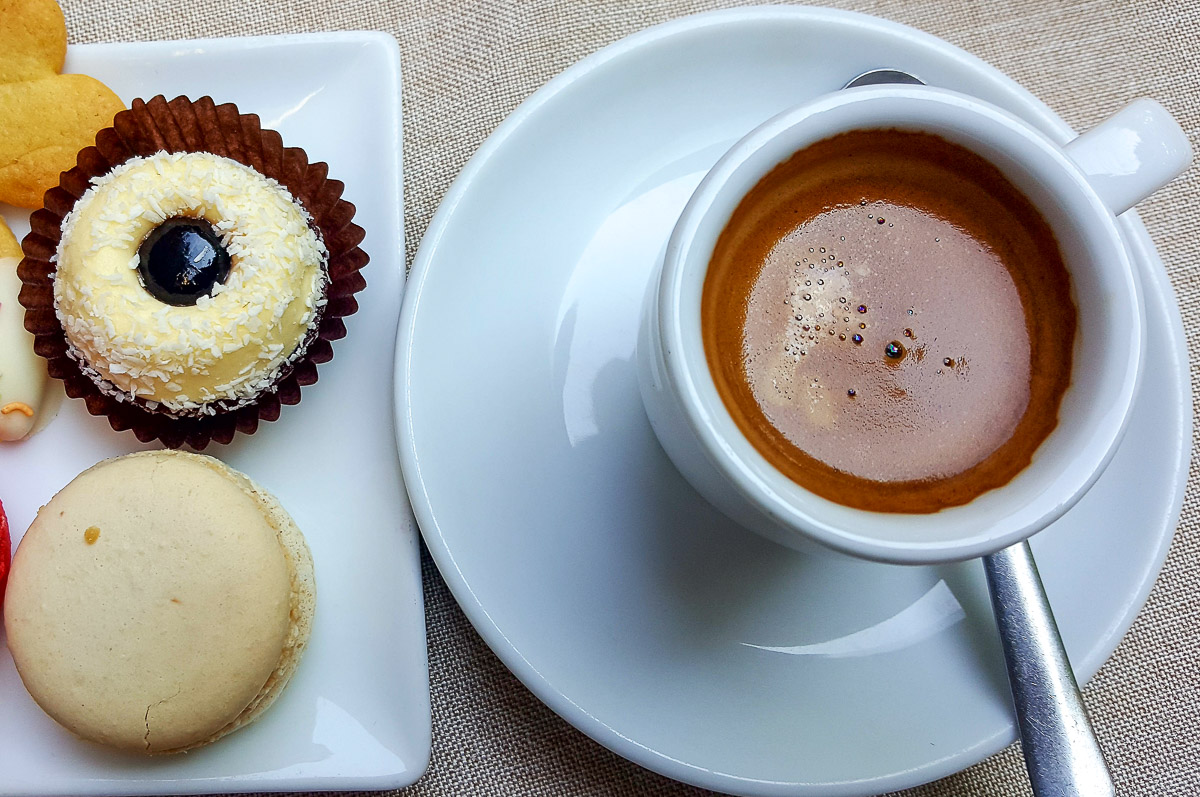
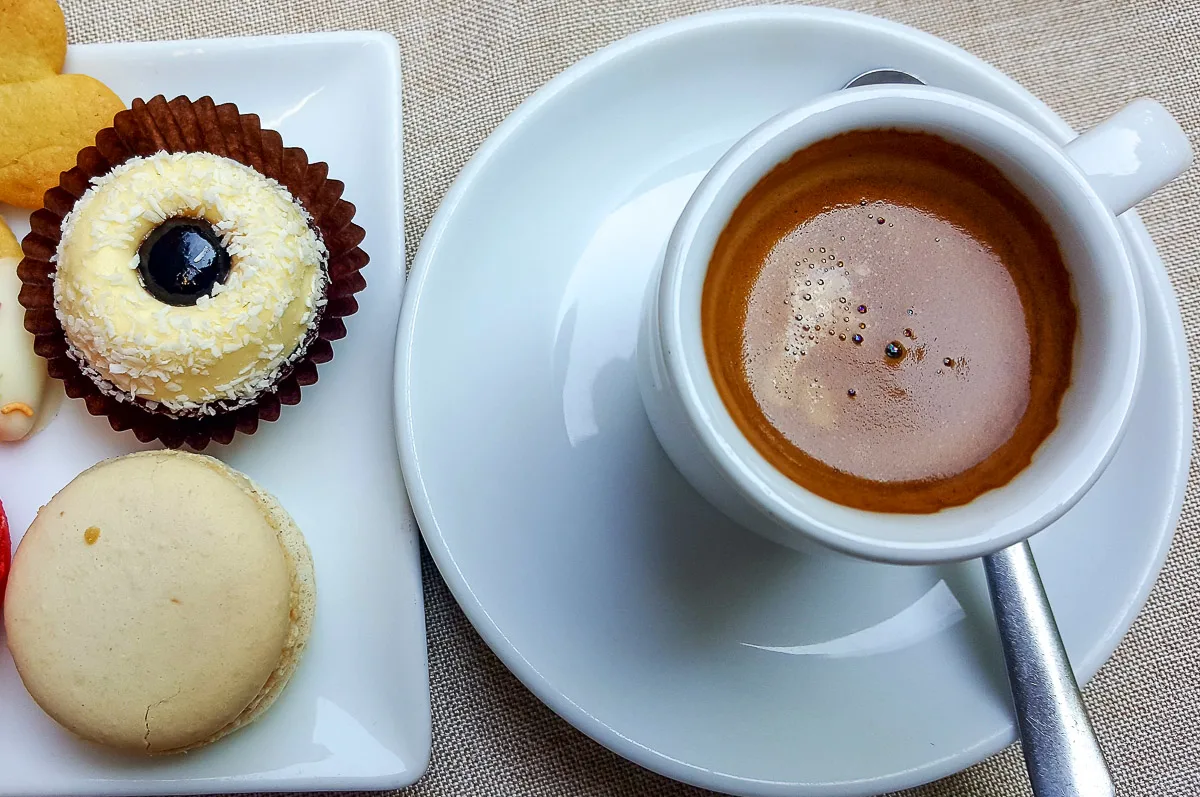
Don’t expect complicated sizes and bucket-shaped coffee cups in Italy. Instead, there is a single-size cup for every type of Italian coffee. An espresso comes in a small, slightly flared demitasse. A cappuccino – in a rounded cup that looks like a small bowl with a handle.
Coffee in Italy isn’t meant to be nursed for hours or carried around as a branded accessory or a showcase for a reusable cup. It’s served and enjoyed on the spot. Sizes are small, tiny by the standards of the international chains, and water or milk isn’t used to bulk out the drink just to make it feel like a better value.
Coffee here is about flavour and the present moment. You order, you’re served, you sip, you savour, you finish, and you get on with your day.
Nothing to carry, nothing to sip all afternoon, nothing as an emotional prop, just the best possible flavour and a brief pause for relaxation.
Speaking of coffee cups, in Naples, you may notice espresso served in a demitasse with a wider mouth and thicker walls, designed to keep the drink at its optimal temperature for longer. These small local differences are part of what makes Italian coffee culture so enjoyable to explore. Just when you think you’ve mastered it, a regional variation appears and deepens your understanding of Italy.
KEY TIP: Order the drink, not a size. Each type of coffee has its own standard cup.
5. Stand at the Counter or Sit at a Table
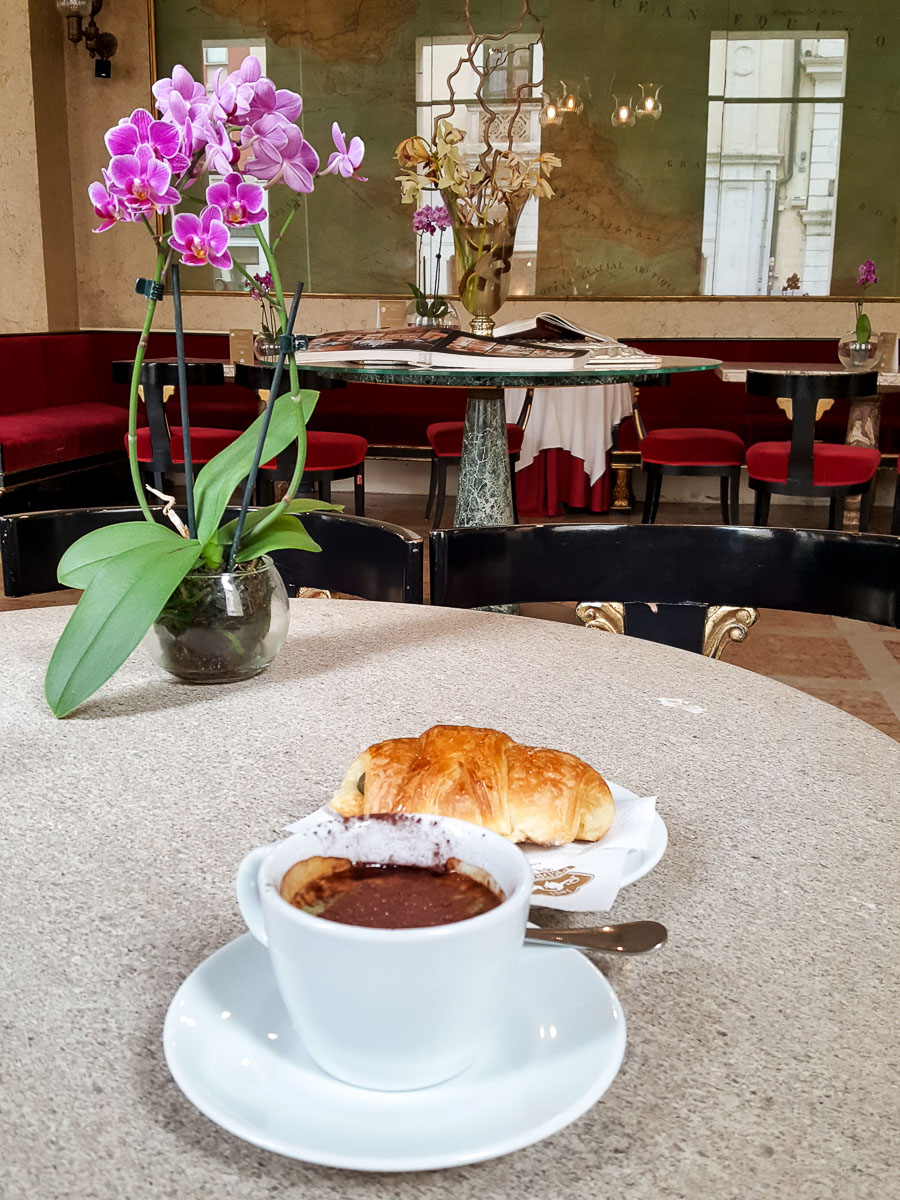
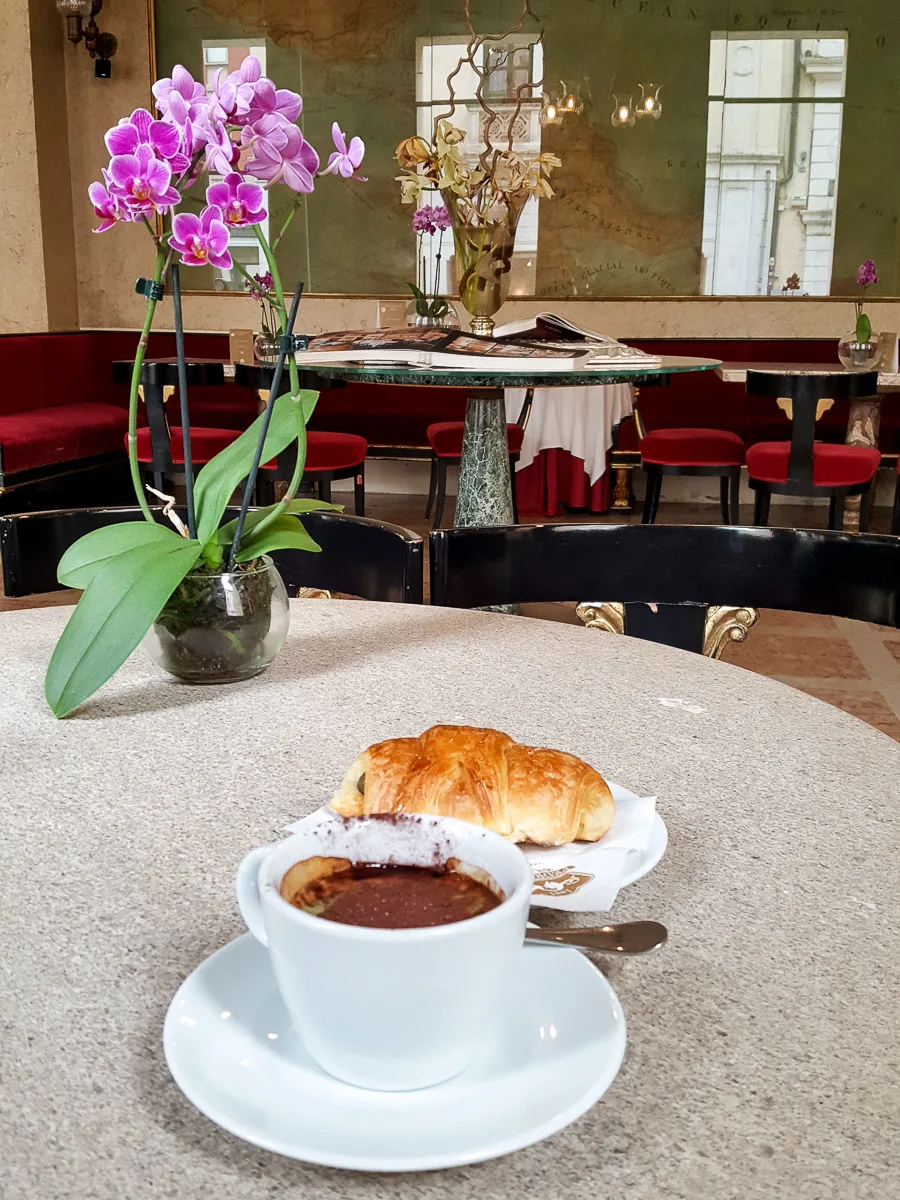
When ordering coffee in Italy, you have two choices for where to take it:
- al banco (at the counter) – you stand and drink, usually leaning against the counter.
- al tavolo (at the table) – you sit and a member of staff takes your order.
It’s fascinating to watch Italians at the counter. From walking in to ordering, drinking, and leaving, the whole ritual often takes about six–seven minutes (based on a purely non-representative observation I once did in an Italian bar over half an hour).
In that time, people are either happily in their own world, enjoying the coffee and their thoughts, or chatting animatedly with a friend or colleague.
If you’re new to it, a busy counter can feel daunting. It’s not always obvious who’s waiting and who’s been served. Hang back for a moment and watch: some people have cups in front of them (already served); some have only saucers (waiting for the barista to place a fresh cup on top); some hold small slips of paper (waiting to pay); others have caught the barista’s eye and are ordering.
That’s your cue! Catch the barista’s eye with a greeting and place your order.
Alternatively, choose a table, sit down, make yourself comfortable, read a newspaper, check your emails, and before you know it, a member of staff will come to take your order.
Bear in mind that in some bars and cafes, a coffee served at the table costs more than if you sipped it standing at the counter. The price may rise even steeper if the table affords a beautiful view, sits on a historic street, or belongs to an elegant coffee house. Paying a bit more is worth it, especially if you need a moment of relaxation after heavy sightseeing or simply want to people-watch and soak up the local atmosphere.
KEY TIP: Choose al banco for speed and price. Choose al tavolo when you want to linger and accept the surcharge.
6. Coffees Have Italian Names
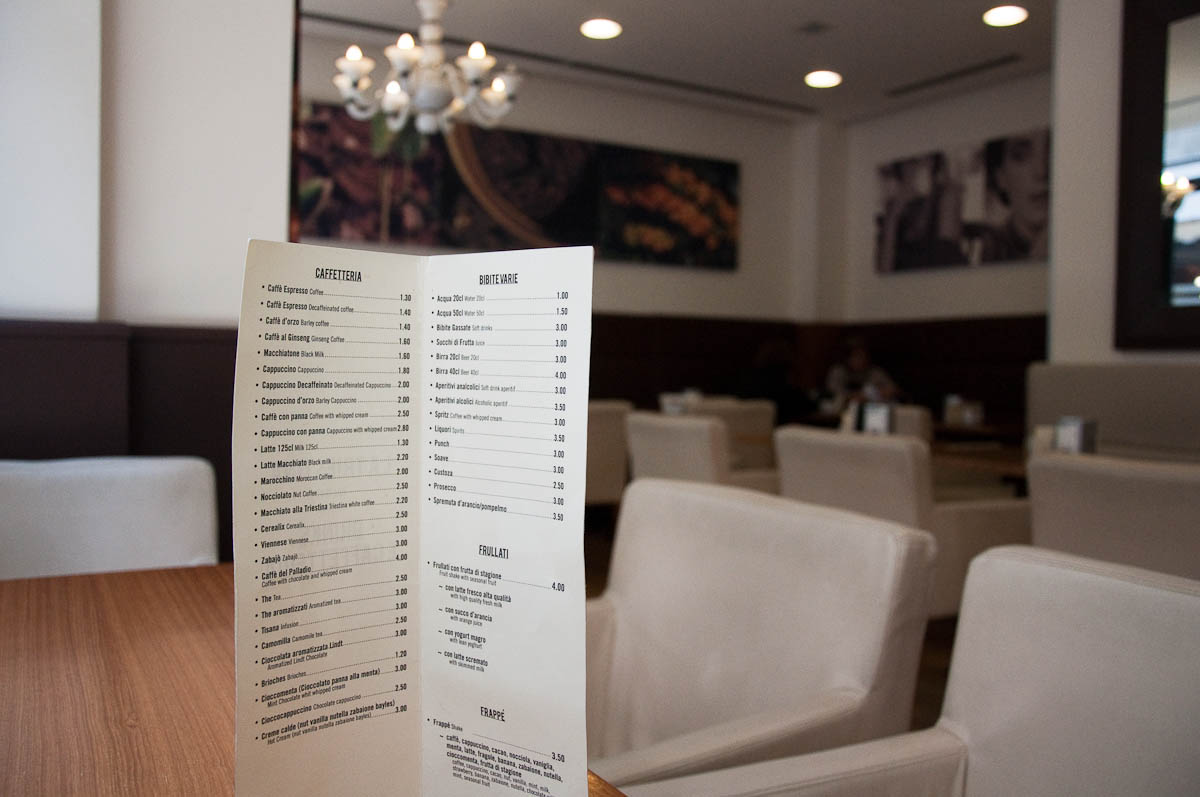
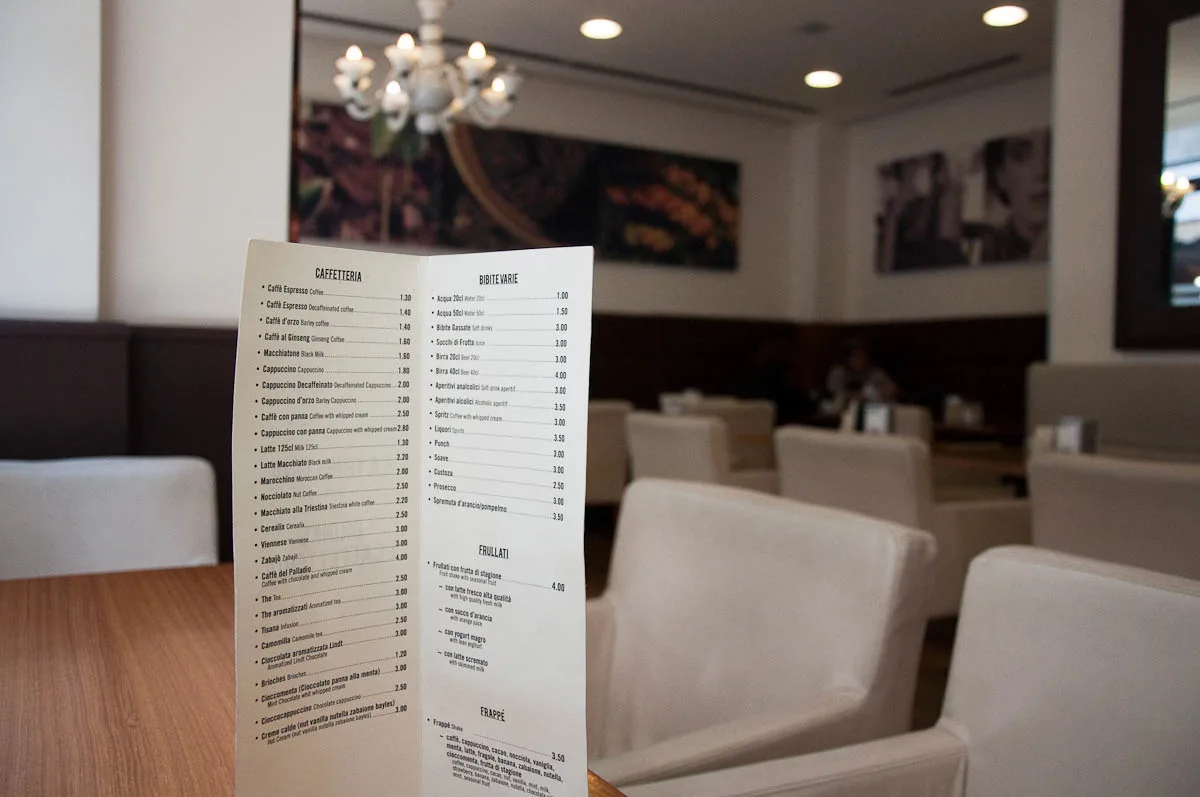
When ordering a coffee in Italy, it’s customary to use the proper Italian name for the drink you want. The Italians have spent centuries refining the correct way to prepare many of the most popular types of coffee in the world. So, it’s only polite to stick to their established vocabulary.
Here are a few simple pointers to help you feel and act more like a local:
- If you want an espresso, say un caffè. If by the force of habit you say un espresso, don’t worry too much. It took me a long time to get out of the habit of saying un espresso and to start saying un caffè. Baristas were very understanding. Just never ask for un expresso. There is no such thing!
- If you want an espresso with more water, this is called un caffè lungo.
- If you want a double espresso, you need to ask for un caffè doppio. Bear in mind that Italian espresso is very strong. So, only order a double if you really, really need it.
- If you want a cappuccino, the locals often call it simply cappuccio.
- If you want just a touch of milk in your coffee, ask for un caffè macchiato. This is an espresso ‘stained’ with a tiny drop of milk/milk froth.
- If you want an americano, bear in mind that in Italy this is usually served as an espresso in a tall mug with a small jug of hot water so you can dilute it to taste.
- If you want a latte (and you are not in an airport coffee shop), then order un caffè latte. Otherwise, you may be brought a glass of milk.
- For something a bit stronger, choose un caffè corretto, which is an espresso with a shot of liqueur.
- My personal favourite is caffè con panna. This is an espresso with a huge dollop of freshly whipped cream on top. Yum!
Bear in mind that bars in Italy don’t always display a coffee menu at each table or on a board behind the counter, so it helps to know the names of the drinks you want. This guide lists 21 types of Italian coffee. You may find it useful right before your trip to the country.
KEY TIP: Say un caffè for espresso and use the proper Italian names for other types of coffee. Avoid saying expresso.
7. Paying for Your Coffee
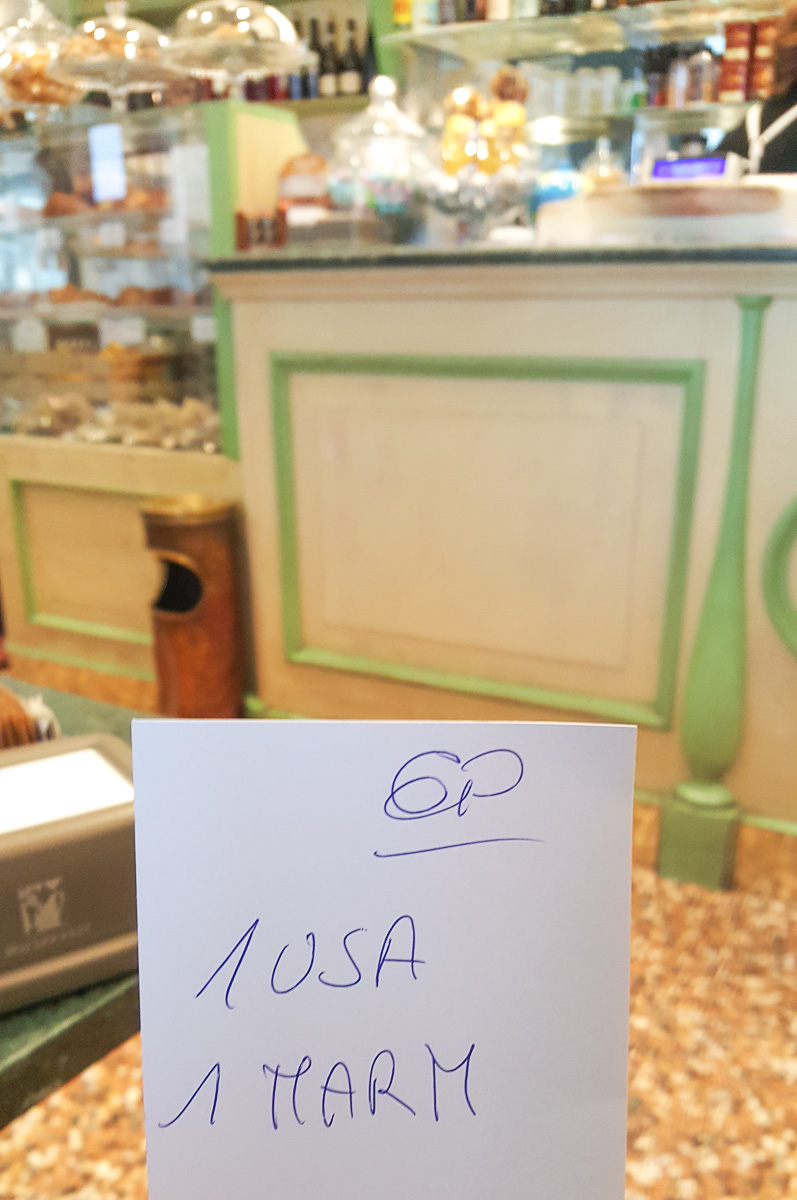
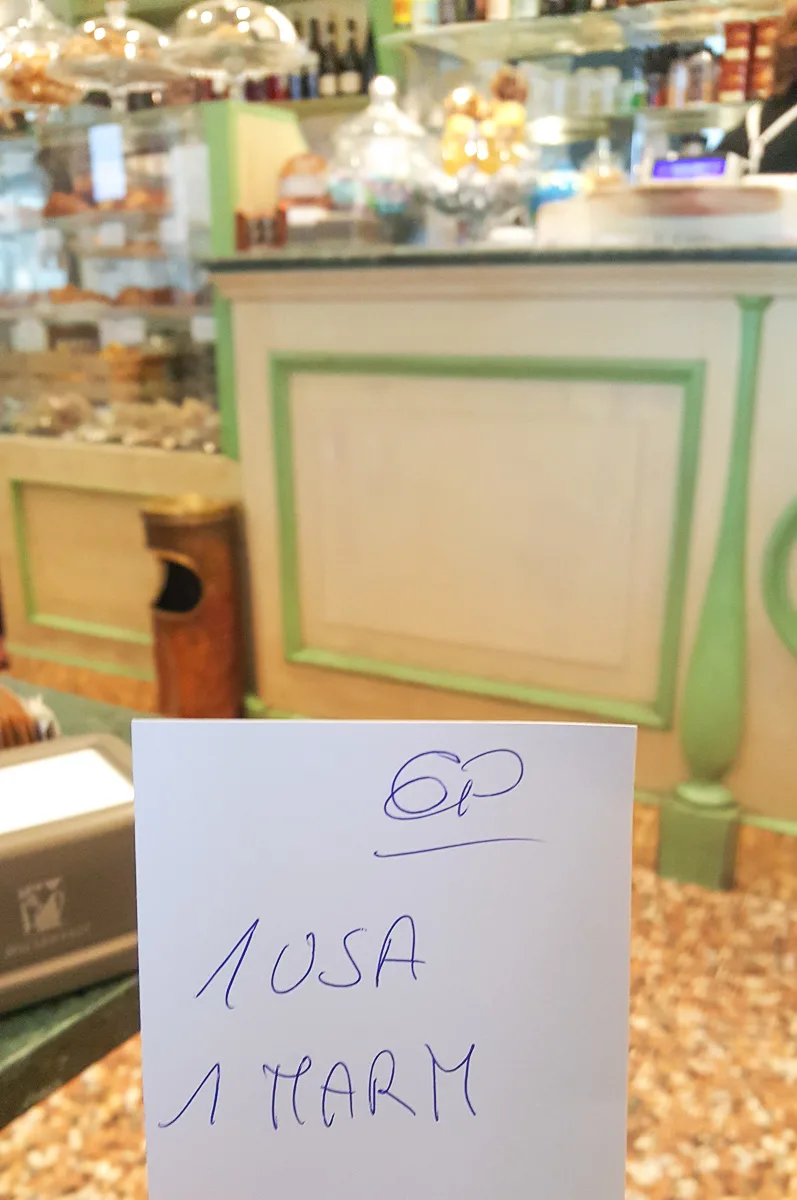
When you order a coffee in Italy, you’ll usually be served your drink and handed a small slip with your order scribbled on it. When you’re ready to pay, take this slip to the cashier at the till. They’ll tell you how much you owe, take your payment, and give you any change.
You can see above one such slip from a favourite bar in Vicenza, where I used to live. I found it very funny at the time and took a photo. I’d ordered an americano and they wrote “1 USA” on my receipt. The “1 MARM” (if you are curious to know) stood for the marmalade-filled brioche I had for breakfast with my coffee.
Sometimes you won’t be given a slip at all. In that case, simply go to the till and tell the cashier what you had. This was the setup at my favourite pasticceria in Vicenza. There was a big element of trust, and I never saw anyone abuse it.
Some Italian bars and cafés operate slightly differently. You go to the cashier first, say what you’d like, and prepay. The cashier gives you a receipt (scontrino), which you then take to the counter for the barista to prepare your order.
Prepayment is common in high-footfall spots like train stations, airports, and busy areas in the historic centres of towns and cities.
KEY TIP: If there’s a cashier line, pay first and take the scontrino to the bar. Otherwise, ask the barista if you need to pay before or after your coffee.
8. Cappuccino is a Morning Drink
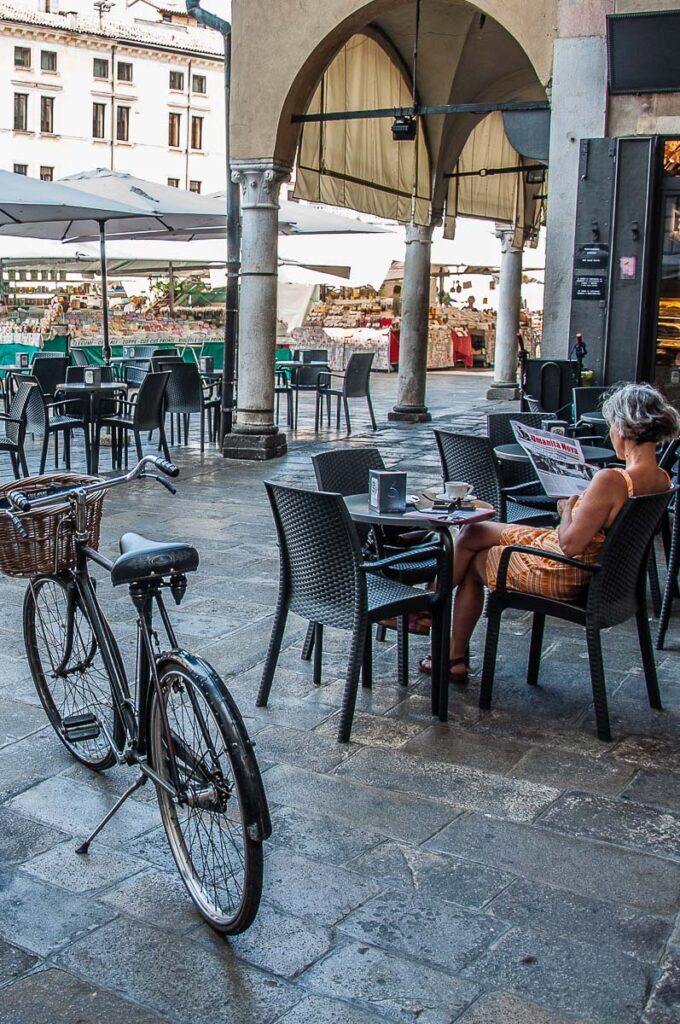
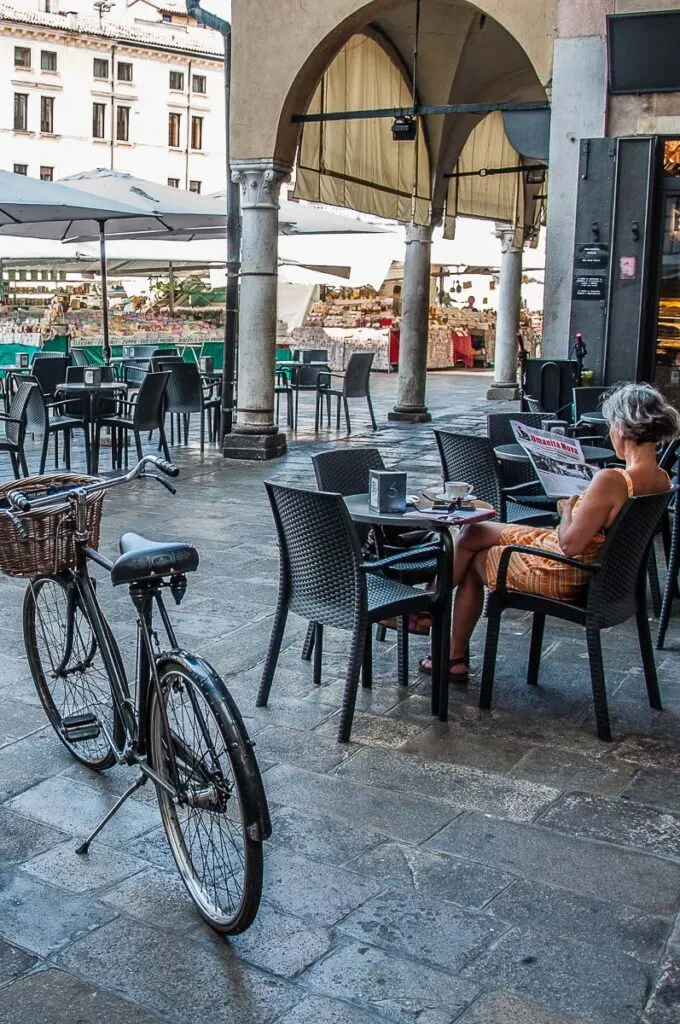
Coffee topped with plenty of milk is a morning drink in Italy. Starting the day with a cappuccino and a pastry (called cornetto or brioche, depending on the Italian region) is the classic Italian breakfast.
Italians consider milky coffee too heavy after lunch or dinner. You won’t usually be refused if you order a cappuccino in the afternoon or after a substantial meal, but it isn’t something locals generally do. If you want a little milk later in the day, go for a macchiato instead. It’s a more flexible drink because it contains much less milk.
I never had a chance to break this particular rule of Italian coffee culture, as I don’t drink milk. I love all sorts of dairy, especially cream, cheese, and gelato, and would gladly have a cloud of whipped cream in my coffee. Just not milk! So, for better or worse, I’ve never had a cappuccino. If you decide to order one after lunch in Italy, let me know how it goes.
KEY TIP: Enjoy a cappuccino in the morning. After meals, opt for a caffè or a macchiato instead.
9. Espresso Any Time of Day
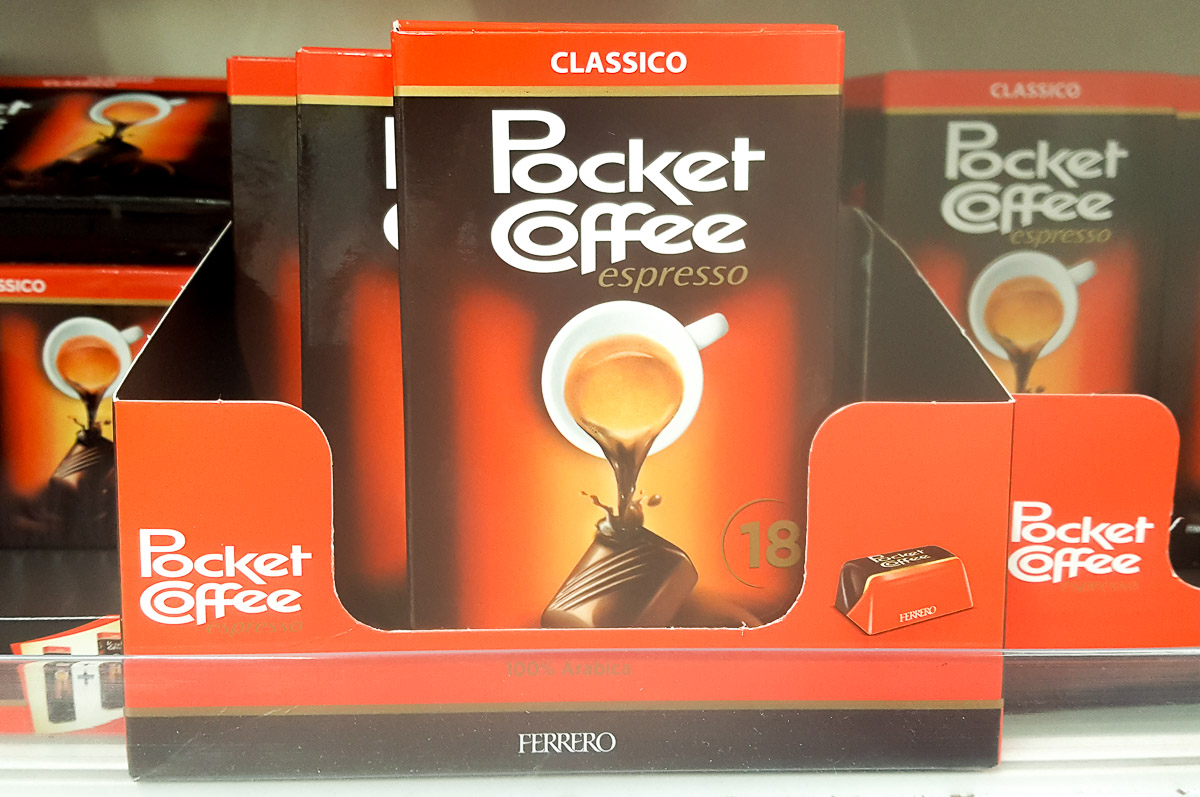
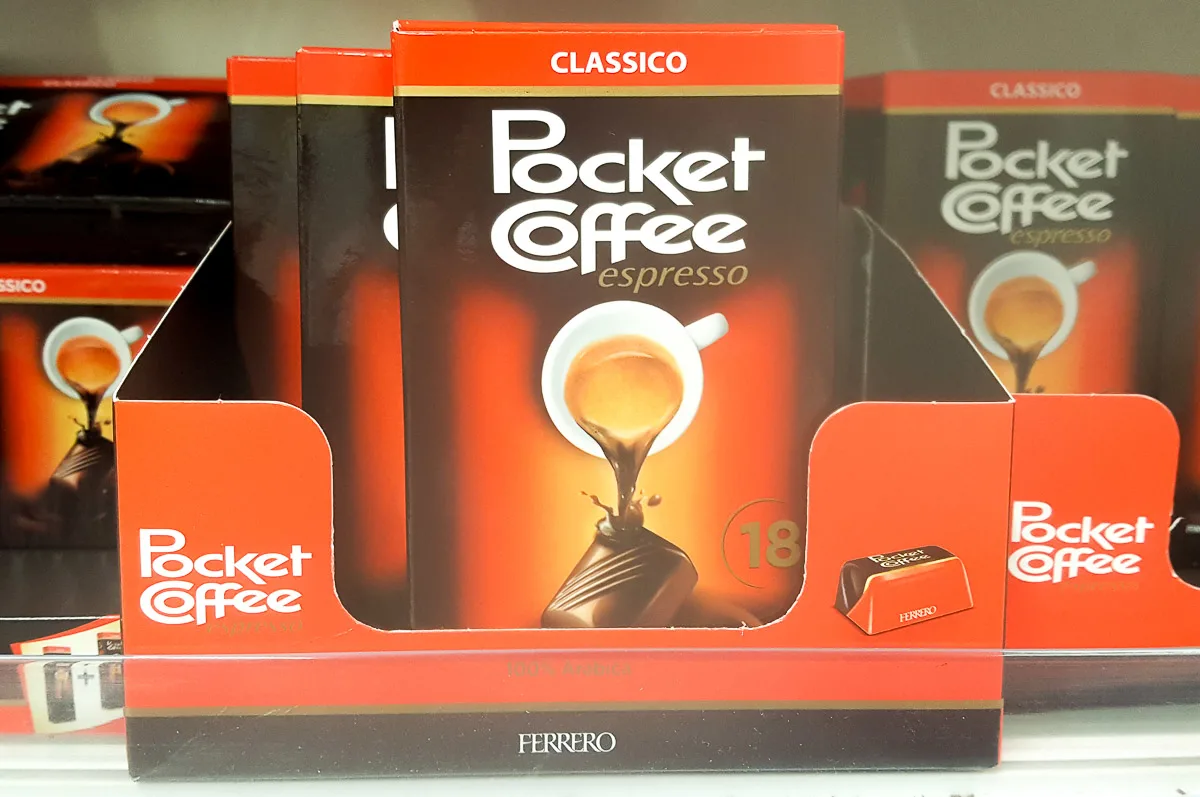
Espresso rules in Italy and can be enjoyed at any time of day. It’s especially popular mid-morning and after lunch or dinner.
Remember that espresso is simply called caffè in Italy.
Italians love their caffè so much that you’ll even find chocolates (pictured above) filled with a shot of espresso. There’s a decaf version, too! This way, even if you can’t make it to the bar, you can still have an espresso (or two) when you need it.
KEY TIP: Order un caffè at any time, especially after lunch or dinner.
10. Water Comes Before Coffee
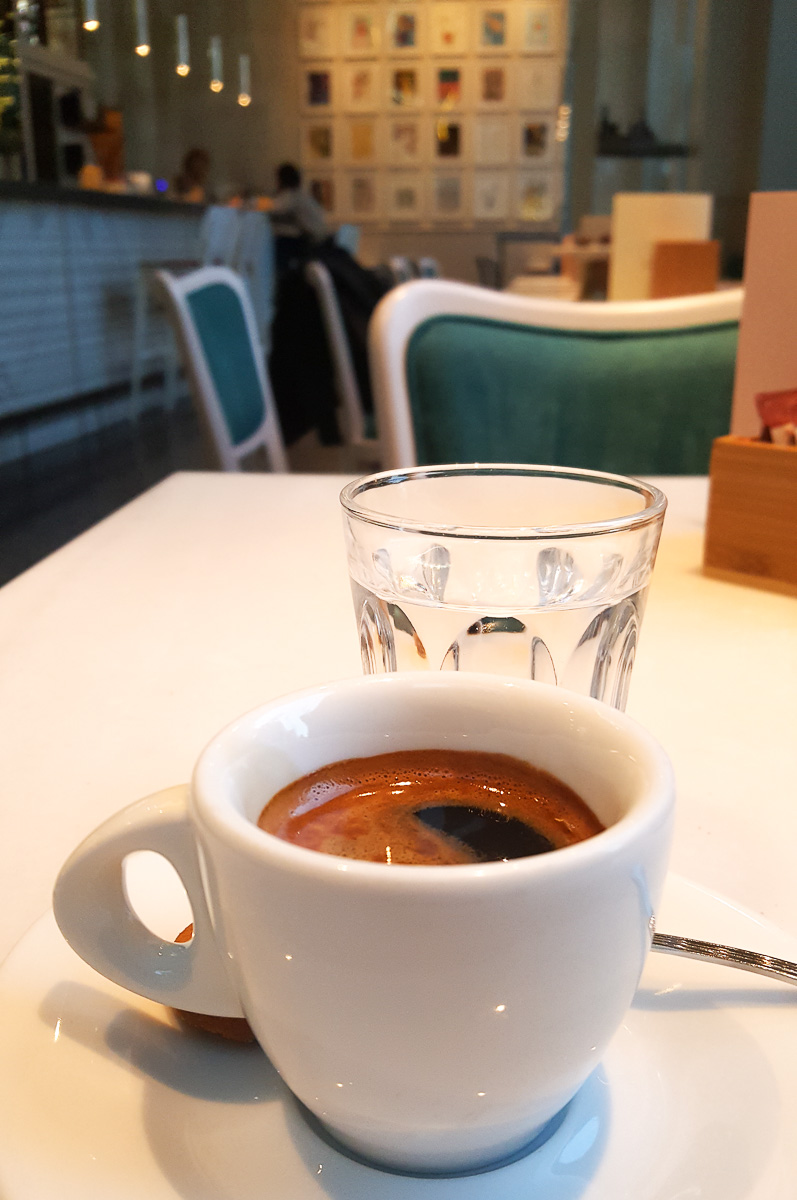
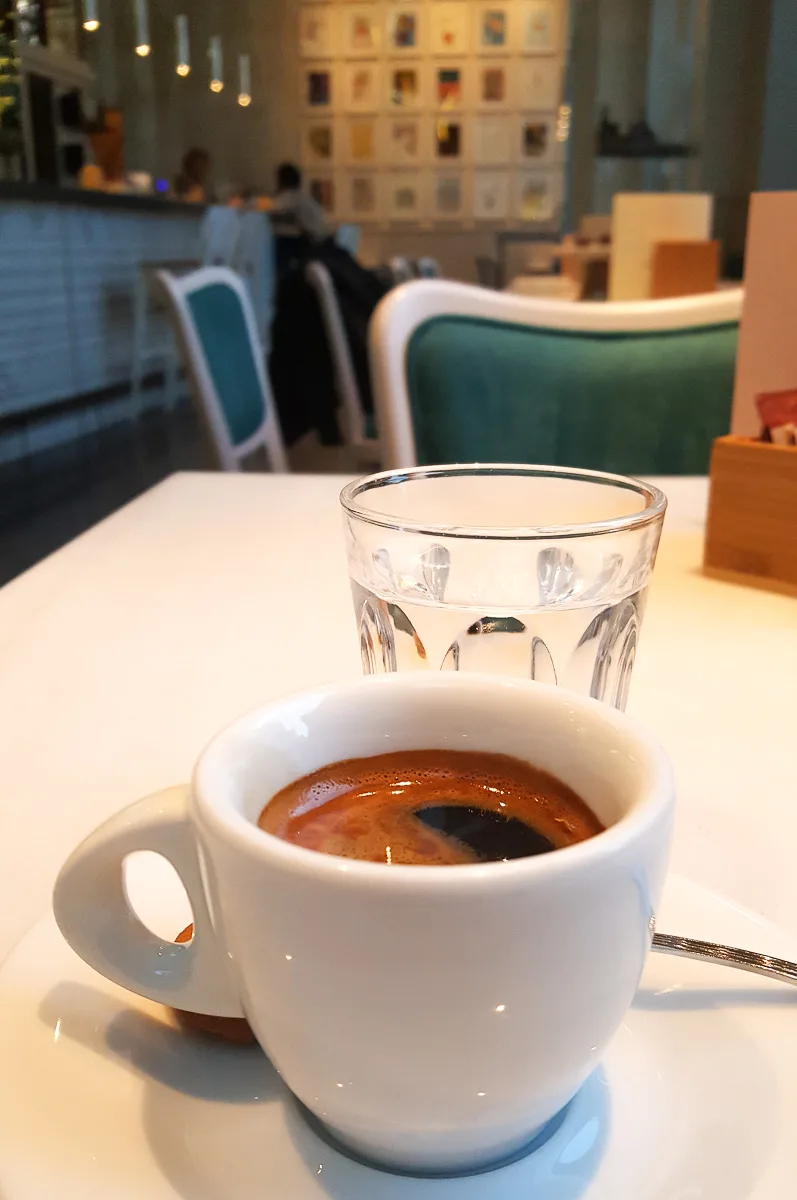
To enjoy the flavour of an Italian caffè, start with a sip or two of water. It cleanses your palate and primes it for coffee’s aromatic range, driven by hundreds of volatile compounds.
When you order a coffee in Italy, sometimes the barista will give you a small glass of water free of charge. More often, you need to order it separately and pay for it. It doesn’t cost much, around €0.50–€0.70, and it’s well worth it if you want the full coffee experience.
I’ll admit this was the last rule of Italian coffee culture I adopted, and I wish I’d embraced it sooner. Even a small sip of water beforehand opens up a world of sensory delights: the coffee reaches corners of your mouth you didn’t know you had, and the flavour feels richer and more textured, a whole symphony of notes.
KEY TIP: Take a sip of water first to cleanse the palate. You may need to order (and pay) for it separately.
11. Mixing Is a Must
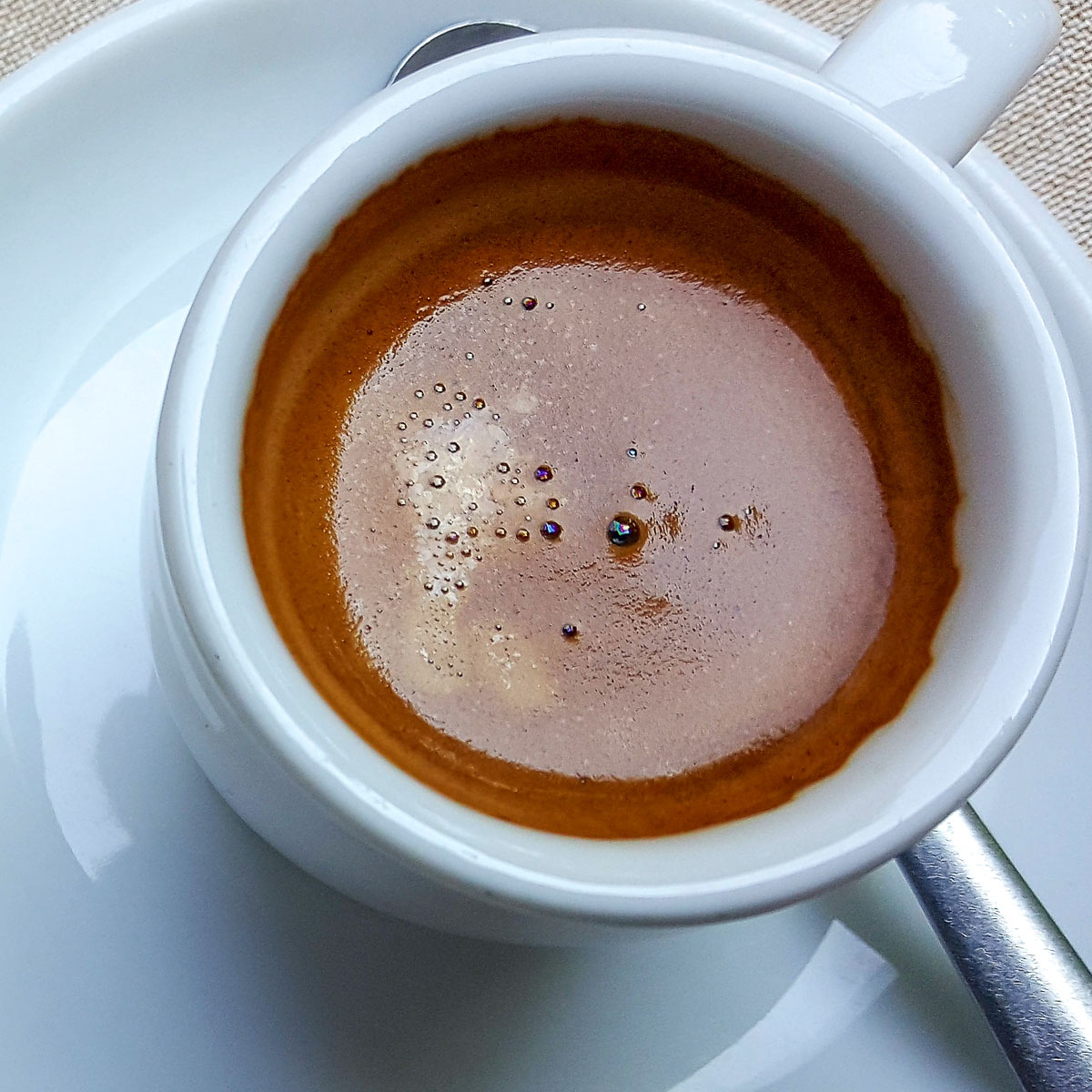
Even if you take your coffee without sugar, you should still give it a quick stir before drinking.
In Italy, a small coffee spoon habitually comes with your cup. Use it to move gently from the top of the cup to the bottom. Never swirl clockwise or anticlockwise. Avoid tapping the sides of the cup, as the clinking is considered unpleasant.
The top-to-bottom stirring distributes the crema, aroma, and flavour evenly, enhancing your Italian coffee experience.
KEY TIP: Give a gentle top-to-bottom stir to integrate crema and aromas. No swirling or clinking.
12. Coffee Spoons Are Not for Licking
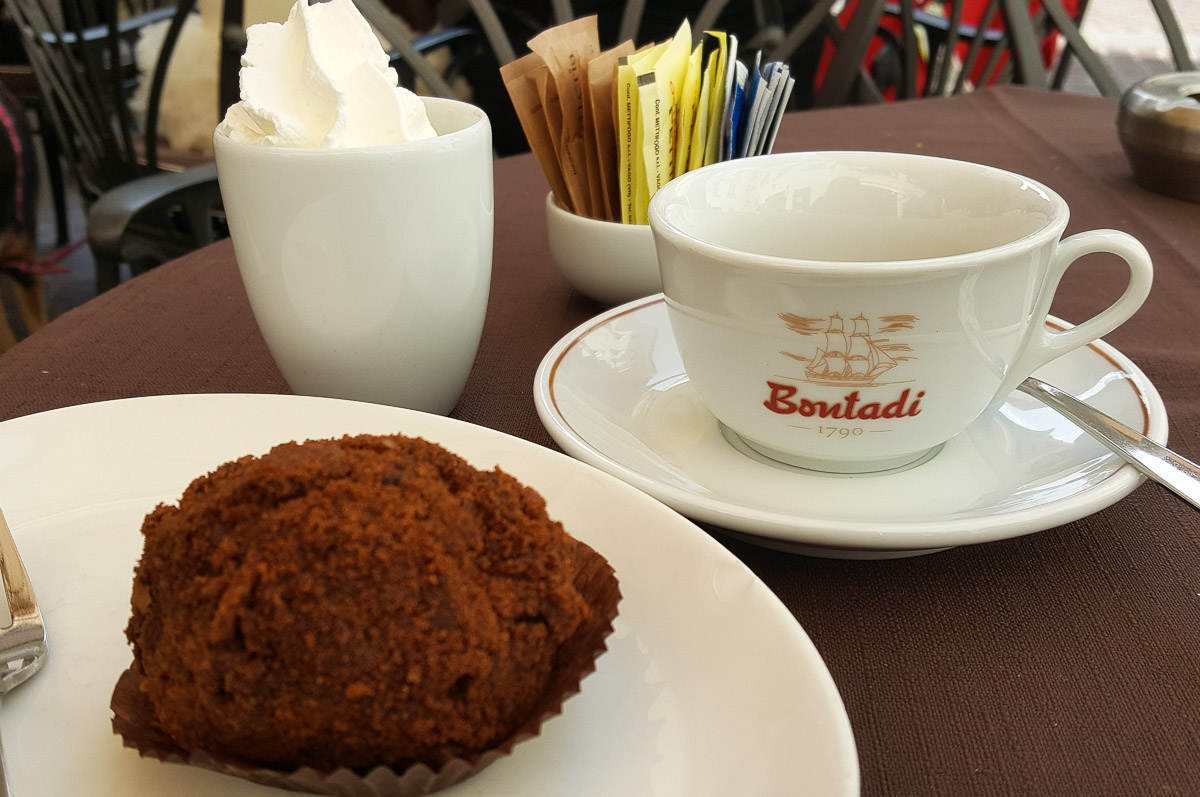
Italians consider licking the spoon after mixing the coffee a sign of bad manners. They simply place the spoon back on the saucer and get on with drinking.
I have to admit that at the start of my life in Italy, I broke this particular rule of Italian coffee etiquette all the time. I could never resist the tiny bits of crema that cling to the spoon. Crema, in a nutshell, is the natural layer of coffee oils that forms on top of espresso, helping it preserve its intense, irresistible flavour for longer.
In any case, I soon discovered that the crema on the spoon doesn’t taste very nice on its own. It’s much nicer to start sipping your coffee as soon as possible and take in its full aroma and flavour. So licking the spoon doesn’t add anything to the Italian coffee experience. It just delays the enjoyment of the coffee itself.
Speaking of coffee spoons and Italian coffee culture, there’s another faux pas to avoid: never leave the spoon in the cup while you drink. It’s uncomfortable, you end up twisting your face to avoid it, and it can be a little dangerous if the spoon hits you in the eye.
KEY TIP: After stirring, rest the spoon on the saucer. Don’t lick it and never leave it in the cup.
13. Observe the Two-Minute Rule
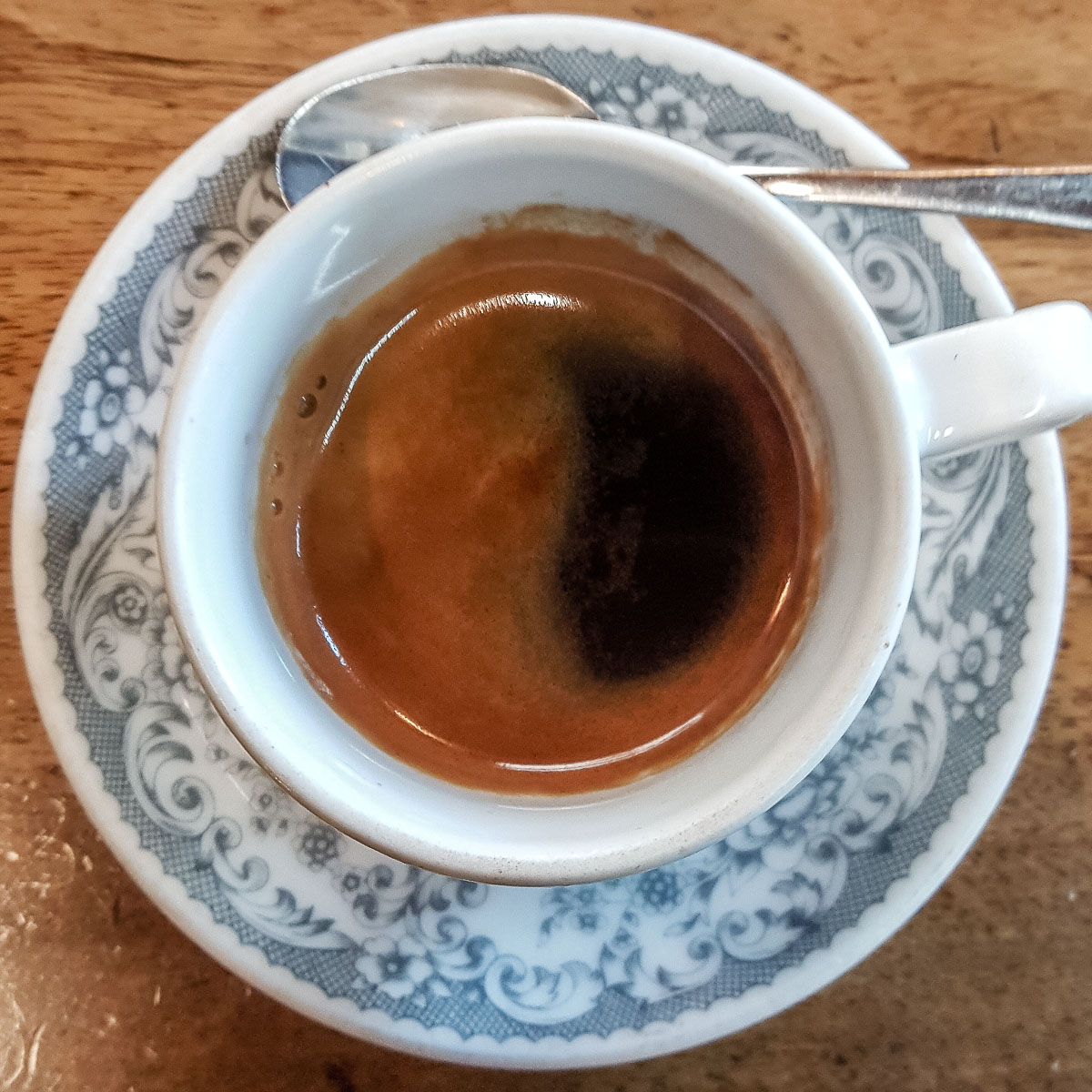
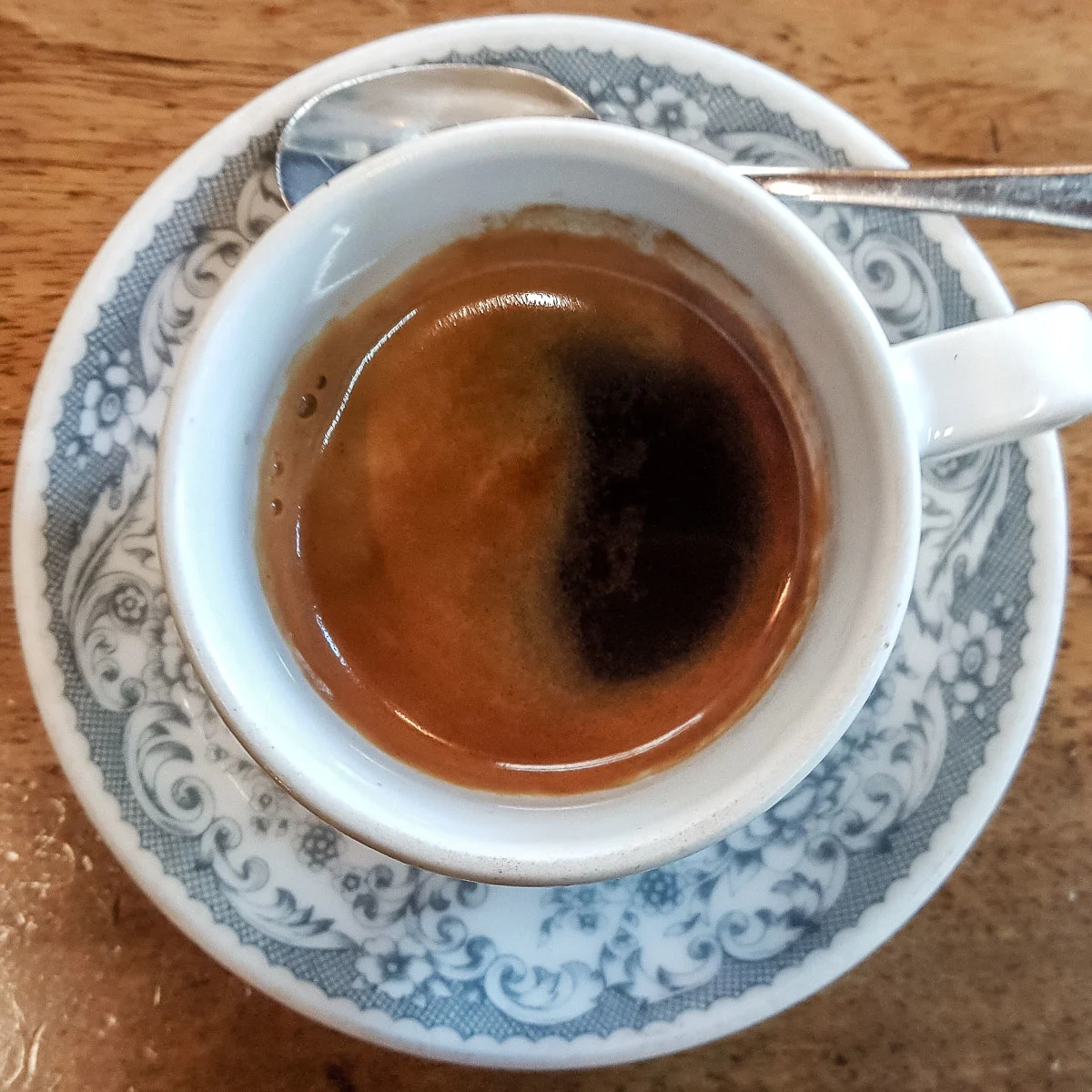
To enjoy an espresso at its best, it needs to be sipped at about 60 degrees Celsius and no more than two minutes after being made. Italian coffee experts advise that around 50% of its flavours dissipate within the first two minutes of making it.
So, don’t linger! Your coffee will arrive as soon as it’s made. If you take sugar, add it promptly, then stir with gentle movements as explained above. If you don’t take sugar, give it a brief stir anyway to integrate the crema. Take a sip of water (if provided or ordered) to cleanse your palate, then take your first sip of coffee. Savour the flavour!
Avoid blowing on your coffee to cool it. It’s considered bad manners. The two-minute rule ensures maximum enjoyment at the right temperature.
KEY TIP: Drink promptly, within about two minutes, for peak temperature and aroma.
14. Coffee Is for Sipping
I often read that Italians drink their caffè in one gulp. In my experience, that isn’t strictly true.
To appreciate the crema and the flavour, Italians sip their espresso. Three or four small sips are all it takes to empty the tiny cup while savouring the aroma. If you knock it back in one go, the crema is displaced and clings to the cup, so you miss much of the taste.
Sipping lets you take in crema and liquid together, giving the right balance of flavour, texture, and heat. It becomes a small personal ritual, a moment of your day to enjoy fully, rather than a mindless gulp.
KEY TIP: Don’t swallow your coffee in one gulp. Sip it instead to savour the coffee flavour.
15. Coffee in Italy Has a Local Character
While espresso and cappuccino are staples across Italy, many coffee drinks are tied to specific places or regions.
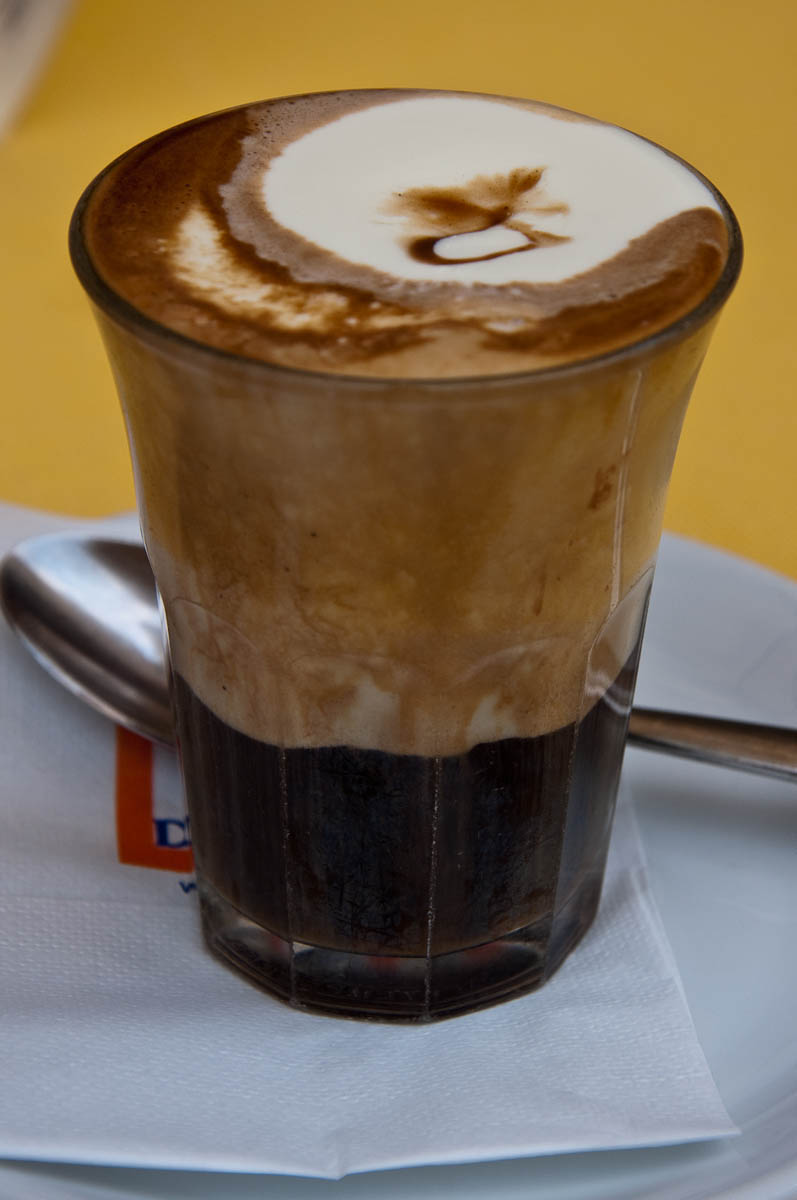
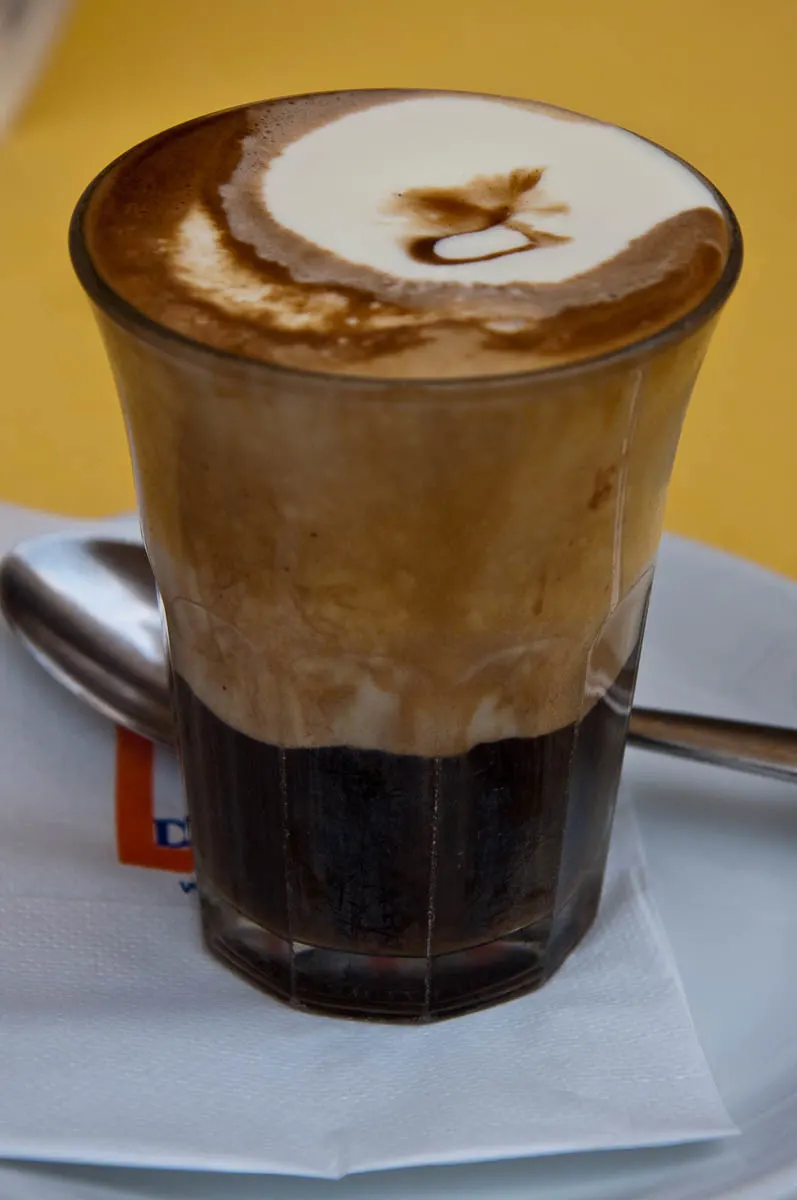
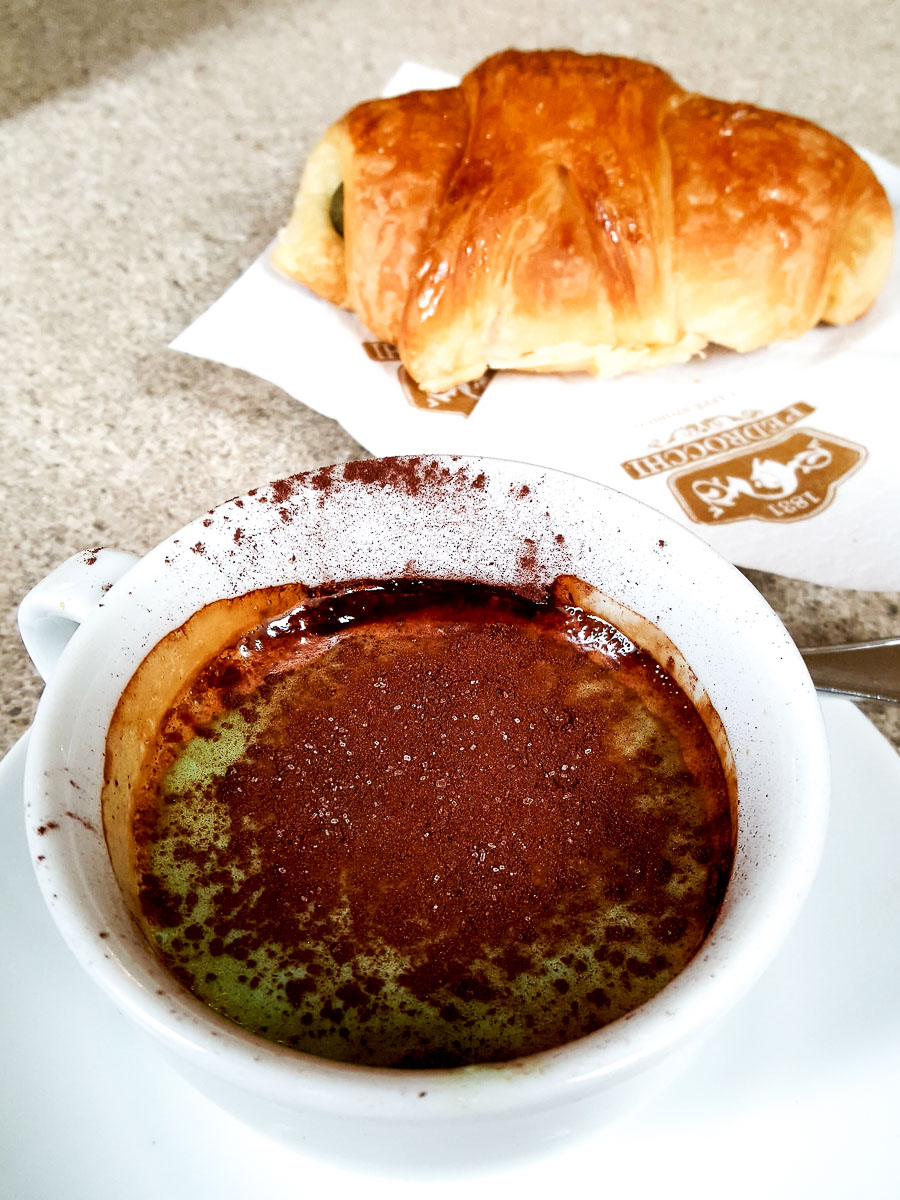
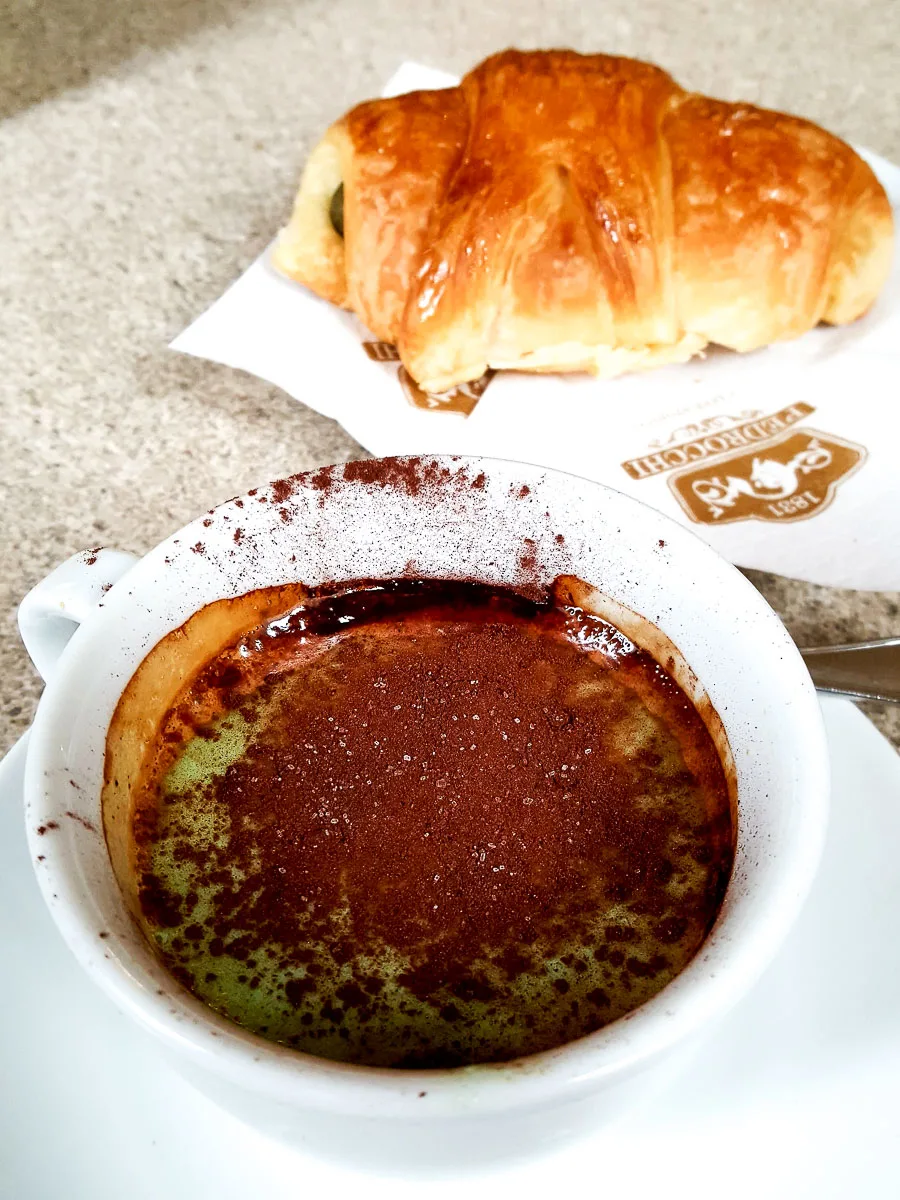
In the northern region of the Veneto, macchiatone is a beloved local choice. Think of it as either a macchiato with extra milk or a compact cappuccino. In Padua, one of the largest cities in the Veneto, there’s a unique speciality coffee made only at the historic Caffè Pedrocchi. Pictured above, this is a shot of 100% Arabica topped with mint syrup, a whipped-cream emulsion, and a dusting of bitter cocoa.
In Livorno, a Tuscan port city, you’ll find ponce. The name comes from the English “punch.” It’s prepared with sugar, lemon peel, rum (sometimes mixed with cognac or sassolino, an alcoholic drink from the province of Modena), and a ristretto. In Turin, Italy’s first capital, try bicerin (a layered mix of espresso, hot chocolate, and cream). In Trieste, in the far northeast, order a capo in B, a macchiato served in a glass. In Naples, try caffè nocciola (a sweet espresso with whipped hazelnut cream). In Lecce and across Salento in the southern region of Puglia, order caffè leccese. This is espresso poured over ice with almond syrup or almond milk.
So, when you are in Italy, always ask for the local coffee drink! It’s a wonderful way to discover lesser-known sides of Italian coffee culture.
KEY TIP: Ask for the local coffee speciality.
16. Summer in Italy Is for Cold Coffee Drinks
Summers in Italy are hot, and Italians cool off with a handful of delicious cold coffee classics.
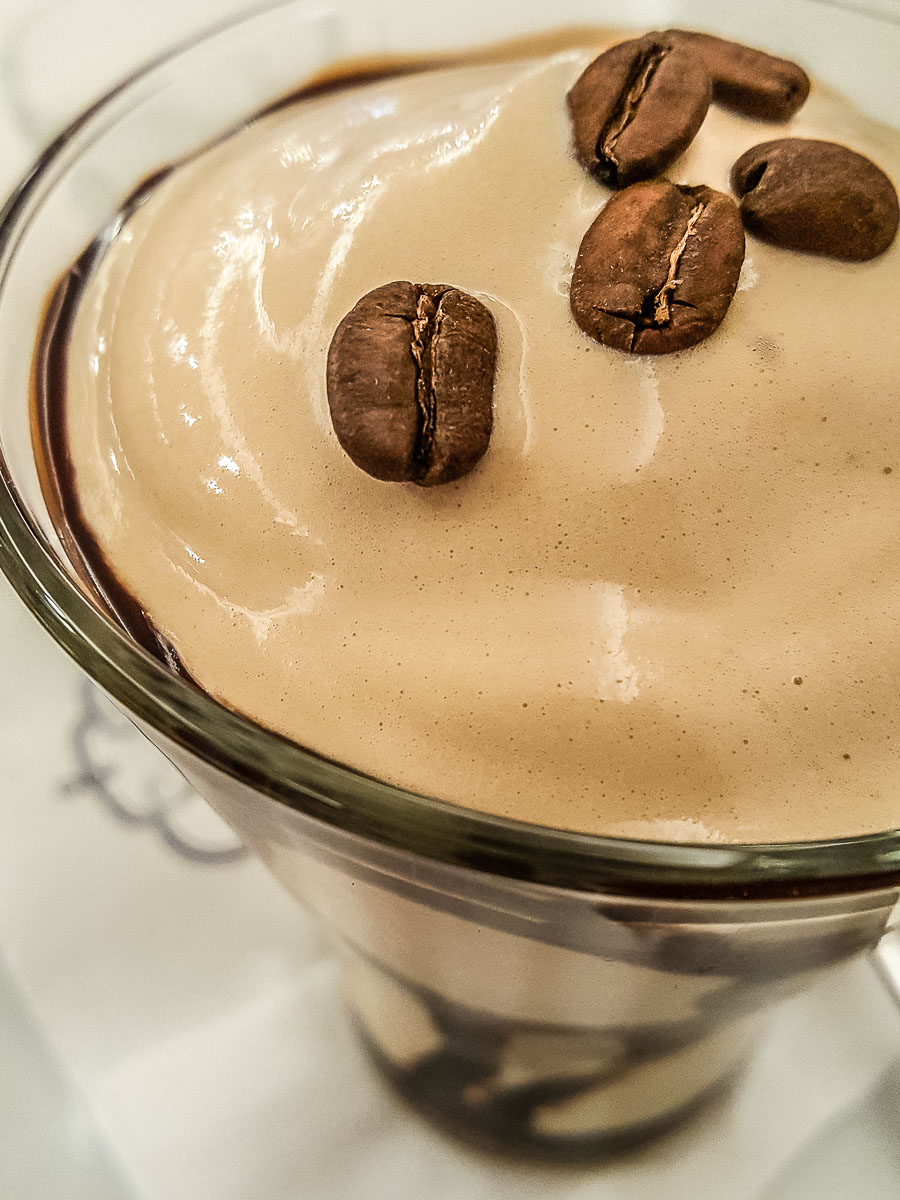
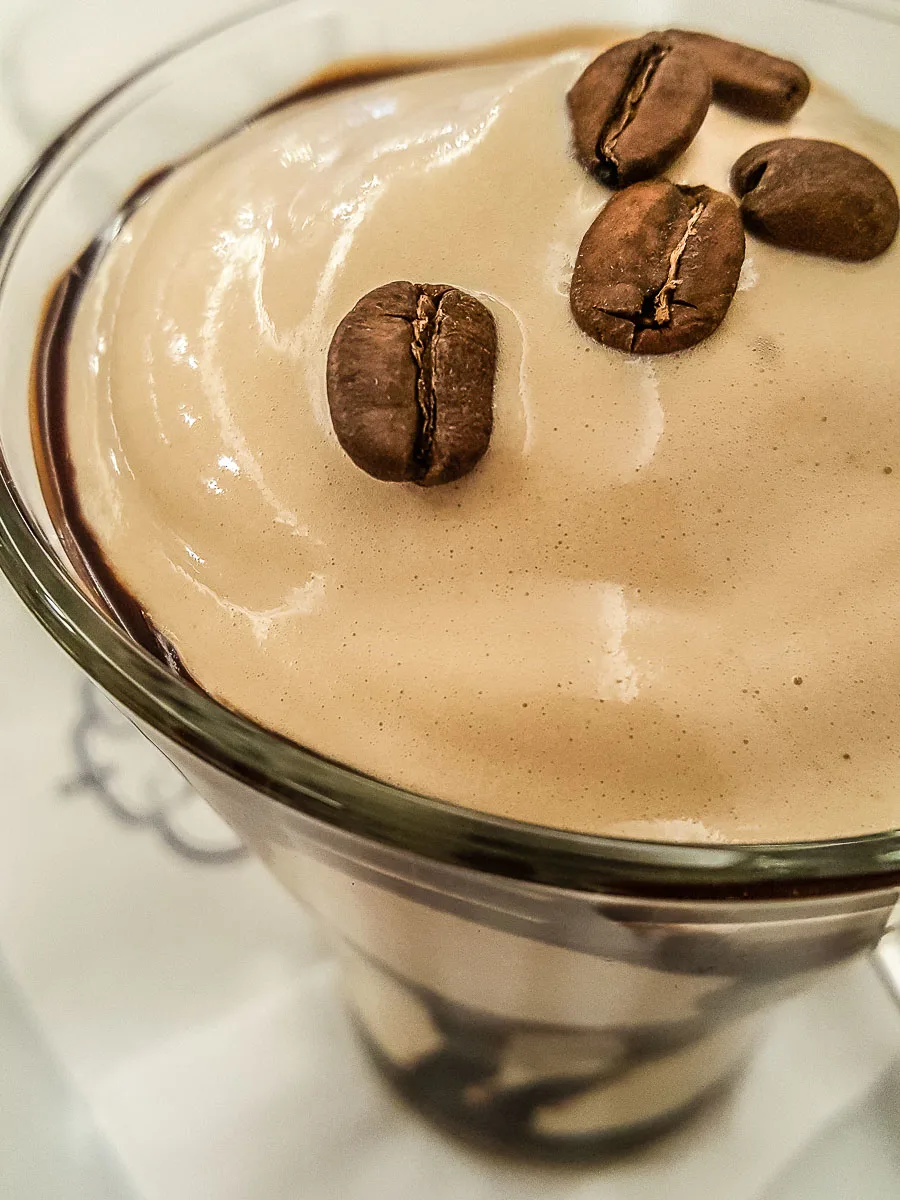
Among the most popular are caffè shakerato (espresso shaken with ice until frothy), caffè affogato (a scoop of gelato “drowned” in hot espresso), and my personal favourite, crema al caffè (a semi-frozen, mousse-like coffee cream, pictured above). For more about each, see:
KEY TIP: In hot weather, try Italy’s cold coffees – shakerato, affogato, or crema al caffè.
17. Coffee Is Not Always Coffee in Italy
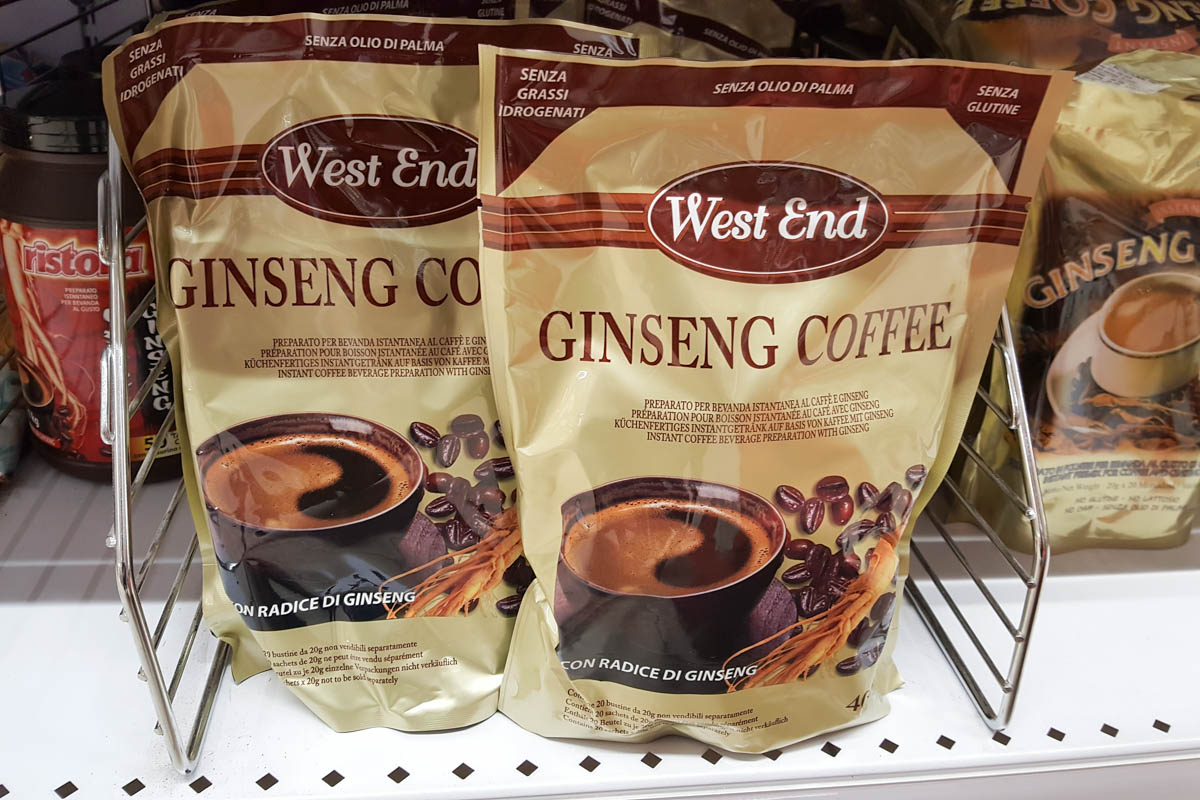
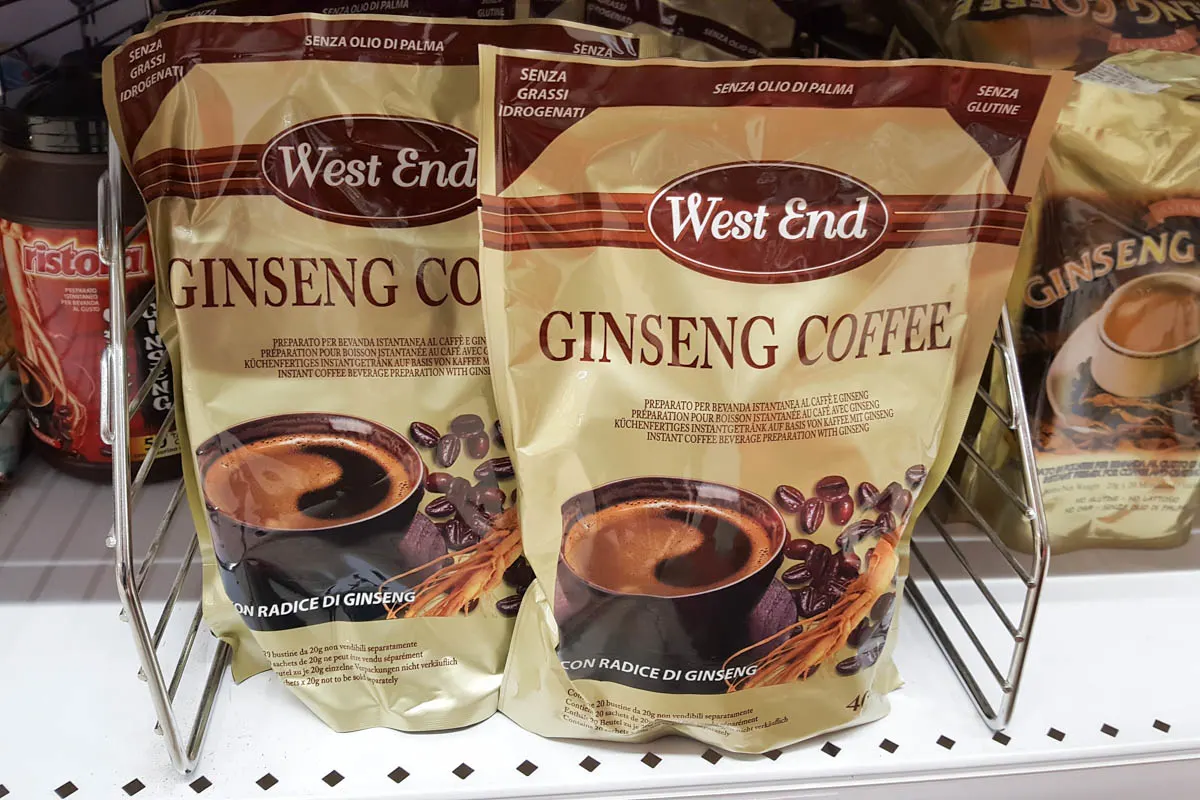
One of the most curious things about coffee in Italy is that not every cup of coffee here is prepared with actual coffee beans.
Look at the menu of any Italian café, bar, or patisserie and you will soon notice caffè d’orzo and caffè al ginseng. The first is a roasted-barley drink with a toasted cereal note. It’s ideal when you want a hot drink without the caffeine. The other is coffee flavoured with the extract of ginseng root. It has a sweet, nutty flavour and makes a pleasant change from the punch of a strong Italian espresso.
Barley and ginseng aren’t used only for espresso-type shots. You can ask for cappuccino or macchiato versions, too. Both are easy to find in Italian supermarkets if you’d like to make them at home.
KEY TIP: Try barley coffee (caffè d’orzo) or ginseng coffee (caffè al ginseng). You can order either as a cappuccino or a macchiato, too.
18. Forget Instant Coffee in Italy
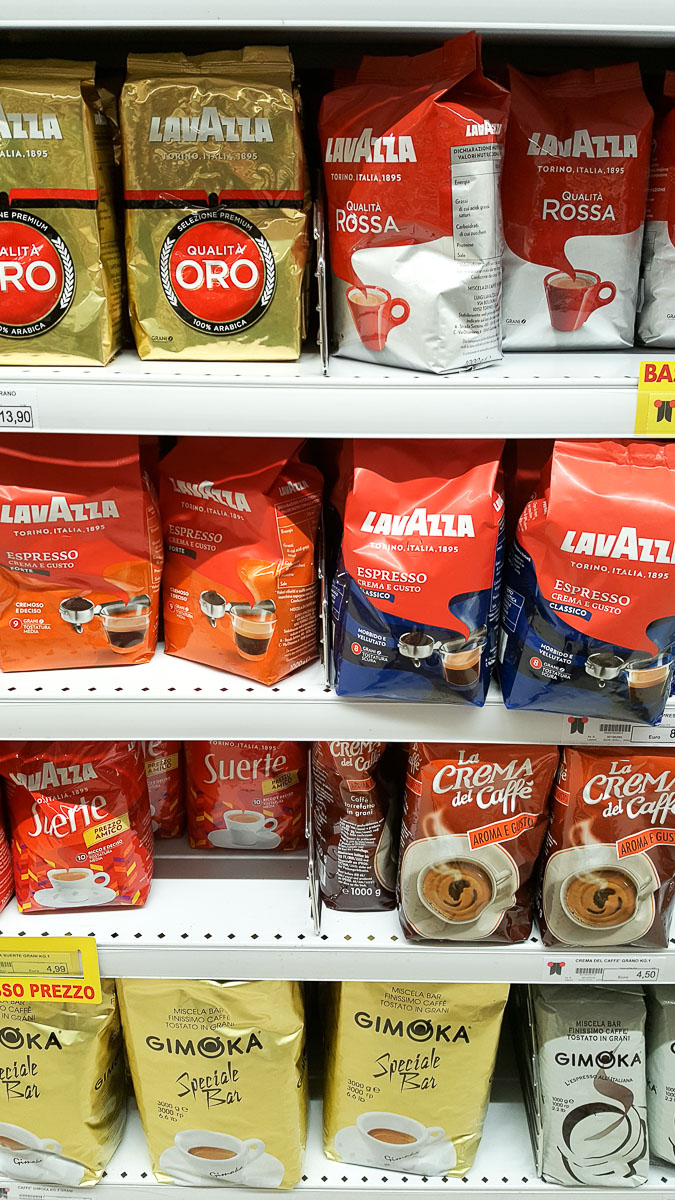
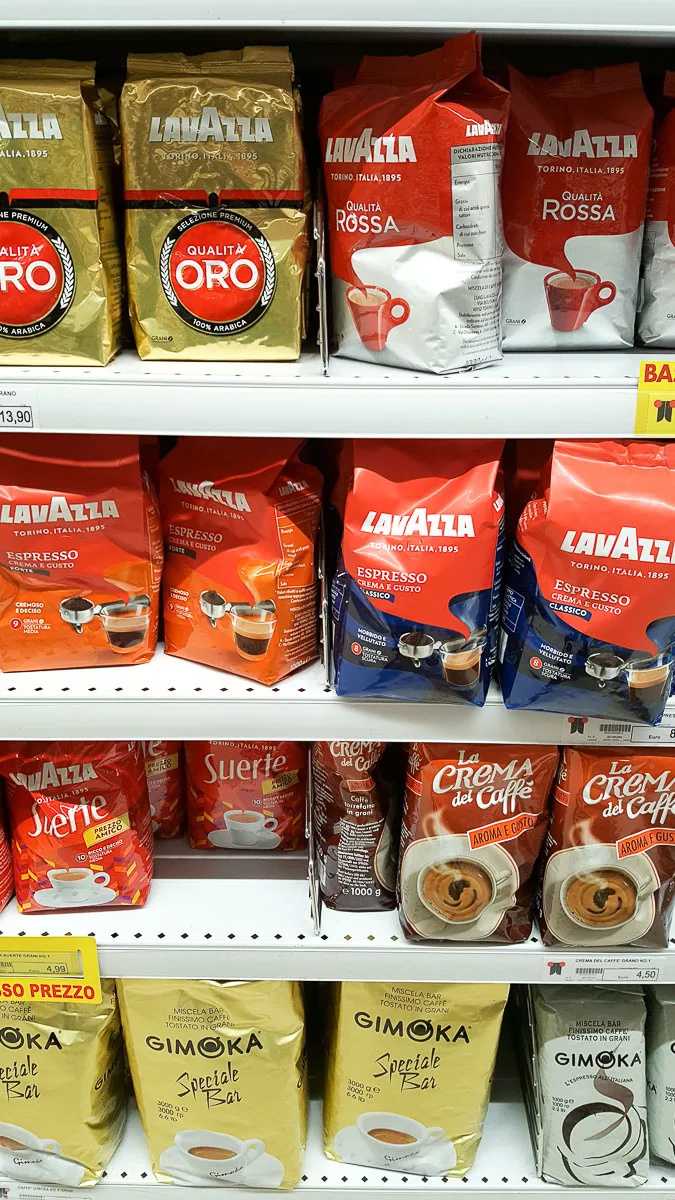
Instant coffee isn’t popular in Italy. Statistics show that while Italians consume around four kg of coffee per person each year, only a tiny amount of it is instant.
In supermarkets, you’ll find a rather limited selection of instant coffee because people rarely buy it. Italians traditionally favour quality over convenience, and that applies to coffee. Most would rather spend a little time each morning making a proper cup with a trusted Moka or a pod machine.
I’ll admit that at the start of my life in Italy, I bought instant coffee out of habit. My local supermarket in Vicenza stocked only two brands, and I suspect I was the only one buying them. Instead, it had a great selection of roasted coffee, both beans and ground, all under famous Italian brands.
By the end of my time in Italy, my Moka had developed a lovely patina. I threw away my last jar of instant coffee after it had spent more than a year untouched in the cupboard.
KEY TIP: Skip instant coffee. Italians favour freshly brewed. Use a Moka, a cuccumella, or a pod machine at home.
19. Moka (or Cuccumella) is a Must
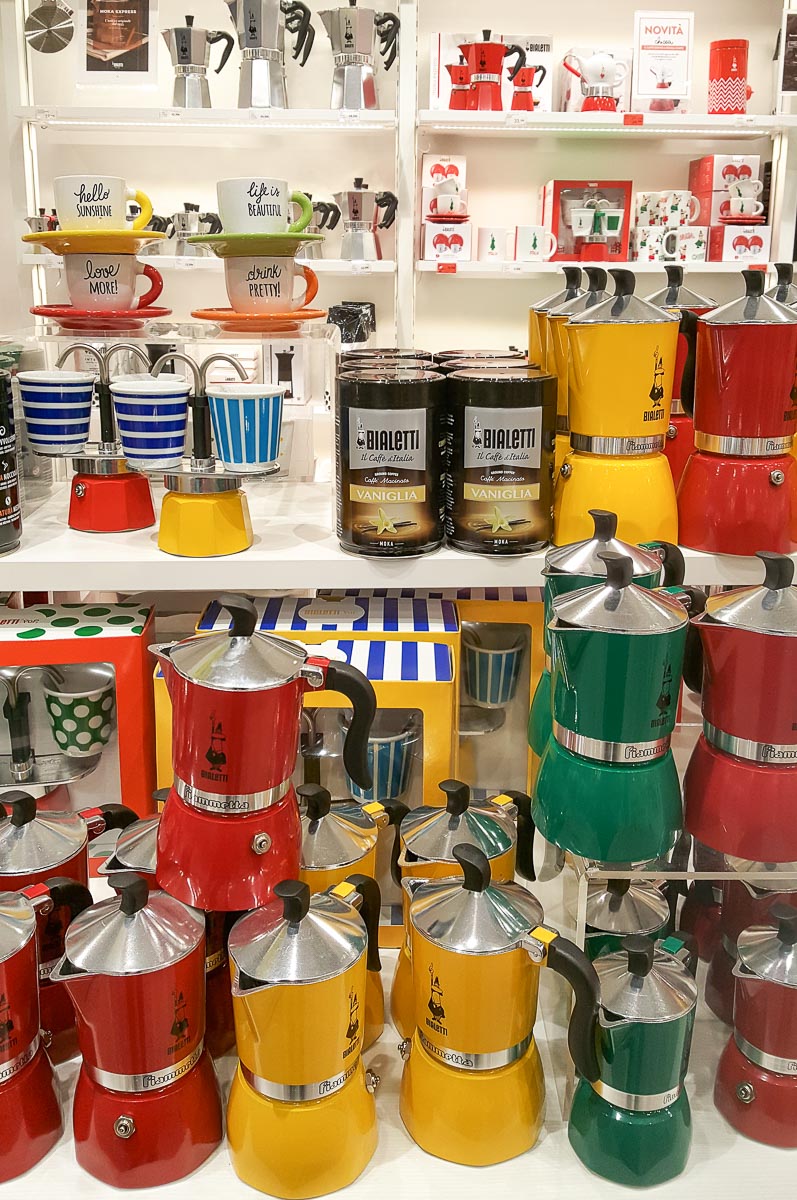
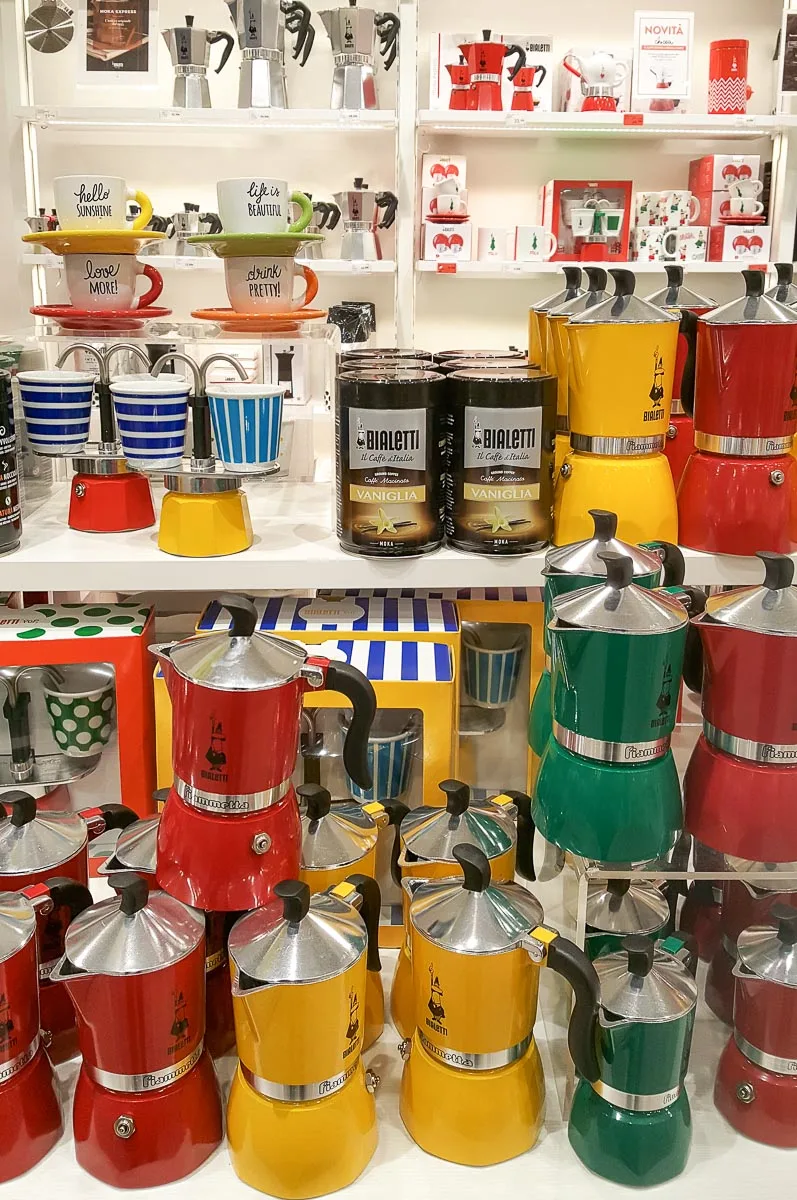
To fully embrace Italian coffee culture, both when you’re in Italy and at home, treat yourself to a Moka.
This is Italy’s traditional stovetop coffee pot. It was invented by Alfonso Bialetti and patented in 1933. A Moka has three parts: the bottom chamber (fill with water to just below the safety valve), the filter basket (fill with ground coffee), and the top chamber (screw on firmly). Then place the Moka on the hob over gentle heat.
The Moka works with low steam pressure that pushes hot water up through the coffee grounds and into the top chamber. It’s well below espresso-machine pressure, but perfect for a rich, aromatic cup. Use a medium-fine grind, don’t tamp the basket, keep the heat low to medium, and take the pot off the hob as soon as it begins to gurgle.
You’ll recognise a Moka by its iconic octagonal shape and by the brand’s moustachioed mascot, the little man with his finger raised, asking for yet another cup of coffee. While using a Moka can feel like a bit of a faff at first, do give it a try. The pot itself is inexpensive, and it makes a wonderfully Italian, fragrant, strong coffee to enjoy at home.
If you spend time in Naples, then get a cuccumella instead. This is the traditional Neapolitan flip coffee pot. Its two metal chambers fit together with a small filter in the middle. It is similar to a Moka, but you need to flip it once you take it off the hob. This way, gravity draws the hot water down through the grounds into the serving chamber. The brew is smooth and gentler than a Moka.
KEY TIP: Bring Italy home with the simple three-part Moka, a stovetop classic that makes strong, aromatic coffee. Alternatively, pick a cuccumella, a traditional Neapolitan coffee pot.
Bonus: How to Order Coffee in Italy (Step-by-Step Script)
Step 1: Walk in and greet
Say a quick “Buongiorno!” (Good day!). It’s polite and sets the tone for your coffee experience.
Step 2: Choose your spot: al banco or al tavolo
- Al banco (at the counter) = fastest + usually cheapest.
- Al tavolo (table service) = slower + a potential service/cover charge, which may increase if the table is outside.
Step 3: If it’s a busy bar, pay first
Some places ask you to pay at the cassa (till) and bring the scontrino (receipt) to the barista. If there is no designated cashier, order directly from the barista and they will guide you when to pay – before or after taking your coffee.
Step 4: Try ordering in Italian
Use the drink’s Italian name and keep it simple.
- Un caffè, per favore. (standard espresso)
- Un cappuccino / un macchiato / un marocchino, per favore.
Add tweaks after the drink: ristretto (short), lungo (long), deca (decaf), d’orzo (barley).
Step 5: Stand, sip, enjoy
At the counter, you’ll get your cup within seconds. Italians drink espresso in a few small sips while standing. Linger if you like, but it’s usually quick.
Step 6: Pay (if you didn’t pre-pay)
Tell the barista what you had: Un caffè e un cappuccino, grazie. They’ll total it. There is no need to list brand names or sizes.
Step 7: Tipping
Not expected. If you loved the service, drop a small coin in the tip jar (if there is one at all).
Step 8: When to have what (quick etiquette rules)
- Milky coffee (cappuccino) = morning.
- Espresso (un caffè) = anytime, especially after meals.
- Iced coffee (shakerato, affogato, crema al caffè) = summer treats.
- Speciality coffee (macchiatone, ponce, leccese) = in its respective place of origin
Common pitfalls & quick fixes
- Saying espresso or expresso → Just ask for un caffè.
- Ordering a cappuccino after lunch → Not rude, just unusual. Go for caffè or macchiato.
- Sitting at a table without realising the surcharge → If you want the lower price, opt for al banco.
- Not sure whether to pay first? → Ask: Si paga prima o dopo?
Pro tips
- Counter prices are typically lower than table prices.
- If the cup arrives with a water glass, drink it first to cleanse the palate.
- Regional coffees to try: bicerin (Turin), caffè nocciola and cuccumella (Naples), capo in B (Trieste), caffè leccese (Salento), macchiatone (Vicenza), ponce (Livorno).
In Conclusion
If you love coffee and Italy, you’ll enjoy exploring Italian coffee culture. Honed over centuries, it’s the set of everyday rituals Italians follow to get the most from a small cup.
In this guide, I’ve shared 19 rules I learned during six years of living in Italy, from why the bar is the natural place for an espresso to why you should stir before you sip, even if you don’t take sugar. I hope they help you enjoy Italian coffee at its best, both on your travels and back at home.
If you’d like to learn more, you might enjoy:
Thank you for reading!
More Helpful Information About Italian Food and Drinks
Food in Italy: Rules of Italian Breakfast, Italian Breakfast Foods and Drinks, How to Eat Well in Italy, Food of Lake Garda, Italian Cheeses, Traditions of Panettone, What is Polenta, Caperberries, Mandorlato Veneto, Venetian Fritella, Sant’Antonio Cakes, Making Prosciutto, Arrosticini, Tortellini, Cremino
Food Festivals in Italy: Chestnut Festivals, Truffle Festival, Cherry Festivals, Pea Festival, Prosciutto Festival, Chocolate Festival
Coffee in Italy: Cold Coffee Drinks, History of Italian Coffee, 21 Italian Coffee Drinks
Markets in Italy: Rialto Fish Market, Padua Market, Types of Markets
More Helpful Information About Italy
Best of Italy: Italian Piazzas, Italian Markets, Accommodation for Every Budget, Best Times to Visit Italy, Italy in Summer, Italy with Kids
Christmas in Italy: Fun Facts, Things to Do, Italian Nativity Scenes, Panettone, Christmas Guide
Northern Italy: Best Cities to Visit, Major Airports, Reasons to Visit
Lake Como: Travel Guide, Reasons to Visit in Winter, Best Towns, Best Things to Do, Milan to Lake Como, Nearest Airports, Getting Around Lake Como
Lake Garda Towns and Villages: Best Towns, Lazise, Desenzano del Garda, Riva del Garda, Malcesine, Torri del Benaco, Punta di San Vigilio, Campo di Brenzone, Borghetto and Valeggio sul Mincio
Visiting Lake Garda: Travel Guide, Map of Lake Garda, Getting Around Lake Garda, Lake Garda with Kids, 8 Best Airports, Venice to Lake Garda, Verona to Lake Garda, Milan to Lake Garda, Bologna to Lake Garda
Venice: Travel Guide, Essential Tips, Things to Do, Major Landmarks, Hidden Gems, How to Navigate Venice, Venice in a Day for Art Lovers, Train Stations, Nearest Airports, Best Tours, Beaches of Venice, Quotes about Venice, Boats in Venice, Haunted Venice, Day Trips from Venice, Arco del Paradiso
Verona: Things to Do in One Day, Verona Opera Festival, Day Trips from Verona, Romeo and Juliet Itinerary, Verona to Venice, Verona to Milan
Padua: Things to Do in One Day, 101 Facts About Padua, 10 Reasons to Visit Padua, Day Trips from Padua, How to Reach Padua
Vicenza: Things to Do, Day Trips from Vicenza, Best Museums, The Beauty of Vicenza
Treviso: Travel Guide
Veneto: Top Places to Visit, Unique Adventures, Most Colourful Places, Mysterious Places, Most Beautiful Lakes, Reasons to Visit, Main Cities, Prettiest Small Towns, Most Beautiful Villages
Lombardy: Best Cities and Towns, Reasons to Visit, Brescia
Friuli Venezia Giulia: Venzone, Most Beautiful Villages
Emilia Romagna: Bologna, Ravenna, Comacchio, Most Beautiful Villages
Marche: Reasons to Visit, Gradara, Frasassi Caves, Temple of Valadier
Umbria: Reasons to Visit Perugia
Campania: Naples
Thank you for reading! Please, leave a comment, pin the images, or share this Italian coffee culture guide on social media.
For more useful information like this, you can follow my blog’s page on Facebook and Instagram, and subscribe to my strictly no-spam newsletter.
Pin This Blog Post!
Pin this image for quick access to this blog post.


Looey
Saturday 23rd of December 2023
Great article, wish I had seen it sooner. My wife and I just spent 10 days in October in Orvieto and Trastevere with side trips to Siena and Assisi and with minor variations your article is spot on. We spent time in the morning observing at the bar and with two months of Italian lessons became very adept at ordering our colazione. You have offered us some interesting nuances to our coffee drinking next time we go. Thank you.
admin
Wednesday 27th of December 2023
Thank you for your kind words and for sharing your Italian experiences! Half of the charm of Italy is observing the local attitude to life and coffee drinking is such an important part of it.
Best wishes,
Rossi :)
Nisha Foerstner
Friday 10th of March 2023
Well, I spent many years in Italian cafes in Vancouver and now I am in Italy and find your article useful, not to mention, surprising. Thank you!
admin
Friday 10th of March 2023
Thank you for your kind words! Have a great time in Italy and enjoy the coffee! :)
Best wishes,
Rossi
Anusha
Thursday 2nd of March 2023
Great and informative article. Can’t wait to have my first cup of coffee in Bologna! ❣️
admin
Thursday 2nd of March 2023
Thank you for your kind words! Have a wonderful time in Bologna. It's a great city to explore in Italy.
Best wishes,
Rossi :)
Mohammed Bilal
Saturday 7th of January 2023
Beautifully written. Enjoyed every bit of it. What an amazing experience just reading your article. Thank you
admin
Saturday 7th of January 2023
Thank you for stopping by and for your kind words! Have a lovely day!
Rossi Thomson
2008taylorheald@gamil.com
Monday 14th of June 2021
I'm very new to your blog but this post was very helpful as I am trying to learn all about Italian coffee culture for when I move there. And I just wanted to say thank-you for your post
admin
Monday 14th of June 2021
Thank you for your kind words! I wish you a smooth move to Italy and lots of great moments getting acquainted with the Italian coffee in situ.
Best wishes,
Rossi :)